
LEGAL, ETHICAL & FICTIONALIs This Even Legal?
Yes, you can write dark fiction.
No, fiction doesn't make every legal rule disappear.
We make the universe feel dangerous. The danger stays on the page.
InnerKiller crafts compelling fictional characters, intricate crimes, and engaging psychological stories, as well as thought-provoking editorial content designed specifically for adults.Fictional Characters • Adult Audience • Responsible Boundaries •
THE LEGAL TRUTHFiction Isn't a Crime.
Writing about disturbing subjects does not make those subjects real.
American law provides substantial protection for creative expression, including fiction that is uncomfortable, violent, provocative, or morally challenging.
But free expression is not an unlimited exemption from every law.
InnerKiller therefore approaches dark storytelling the same way any responsible publisher should:
We create fiction.We respect real people.We maintain editorial boundaries.And we separate storytelling from real-world instruction or encouragement.
We create art. Not alibis.
CREATIVE EXPRESSIONStories Are Allowed To Make You Uncomfortable
Dark subject matter does not automatically equal unlawful speech.
Crime fiction, horror, psychological thrillers, satire, and other forms of storytelling regularly explore behavior that would be unacceptable or illegal in real life.
That distinction matters.
✅ A fictional character committing murder is not the same thing as encouraging someone to commit murder.
✅A fictional obsession is not a real threat.
✅A morally disturbing protagonist is not an endorsement of her behavior.
Creative expression receives broad constitutional protection in the United States, including expression that many people may find disturbing or offensive. At the same time, some narrow categories of speech, including qualifying true threats, can fall outside that protection.
FICTIONAL INNERKILLER UNIVERSEOur Serial Killers Are Invented
Toe-Tagged Tales and iKProfiles are built around fictional characters and fictional narrative events.
InnerKiller's current editorial standards specifically prohibit submissions that recreate identifiable real people, actual crimes, or thinly disguised true-crime cases.
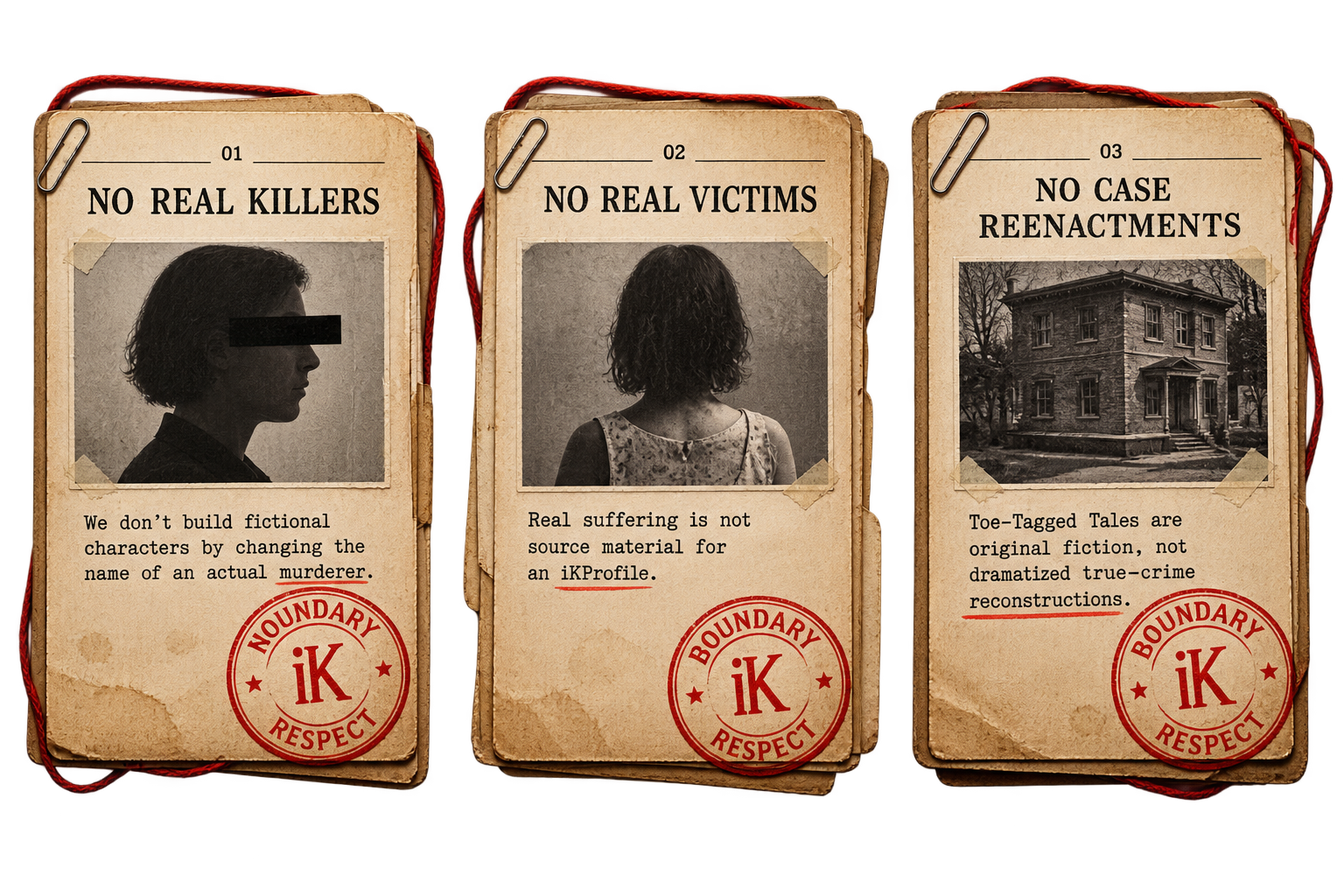
That rule isn't here because fiction needs permission to be dark. It's here because original storytelling is stronger when someone else's real tragedy isn't being repackaged as entertainment.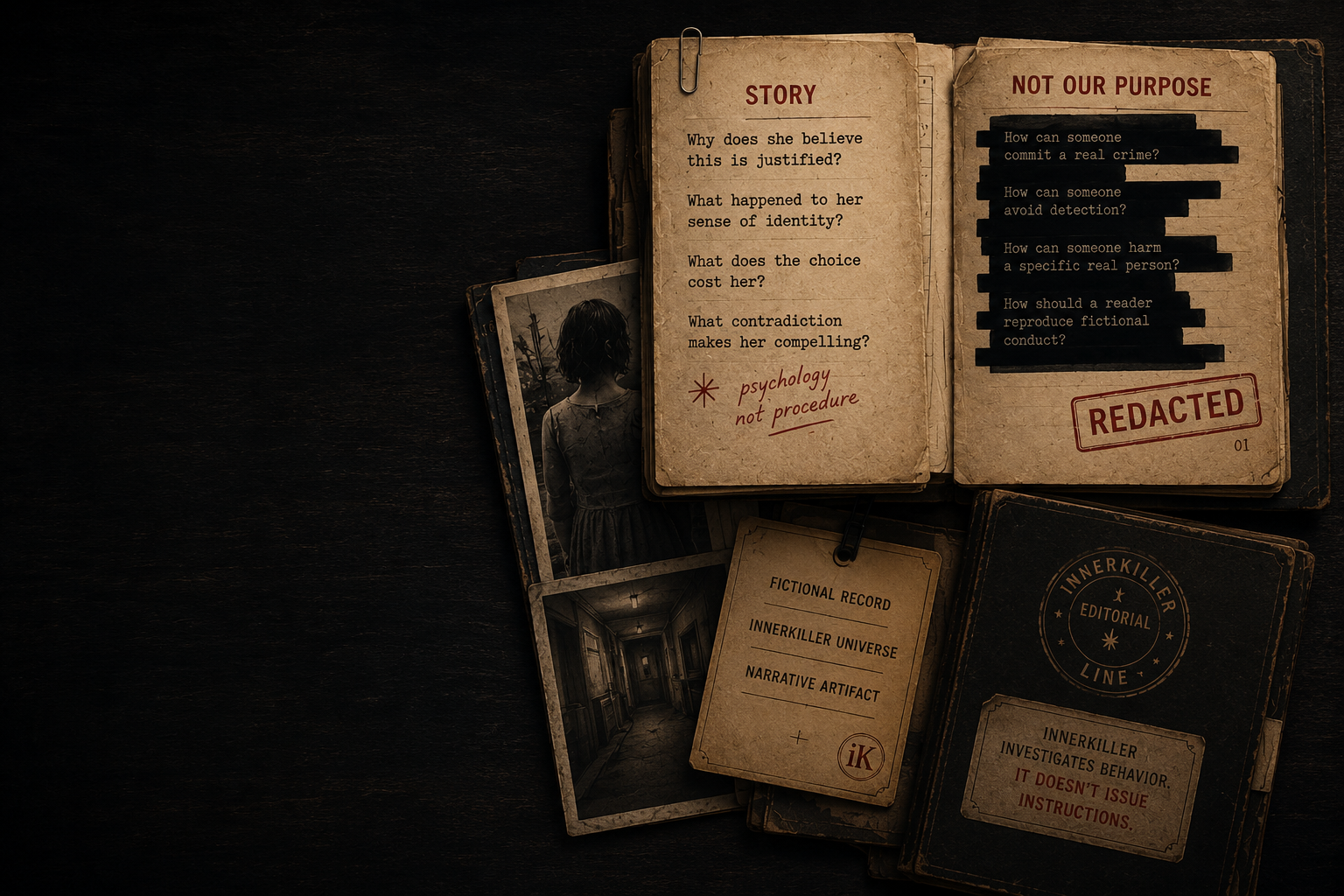
STORYTELLING VS. REAL-WORLD HARMWe Explore the Why.
Not the How-To.
InnerKiller can portray fictional violence, manipulation, obsession, coercion, criminal behavior, and psychological deterioration because those subjects belong to storytelling.
What we don't want is material designed to meaningfully instruct, encourage, facilitate, or celebrate real-world harm.
Our iKProfile terms already draw that distinction: creator submissions should focus on character psychology, motivation, emotional complexity, and narrative foundations rather than real-world tactics or instructional material.We investigate behavior. We don't issue instructions.
THE INNERKILLER ILLUSIONIf It Feels Real, That's the Craft Working.
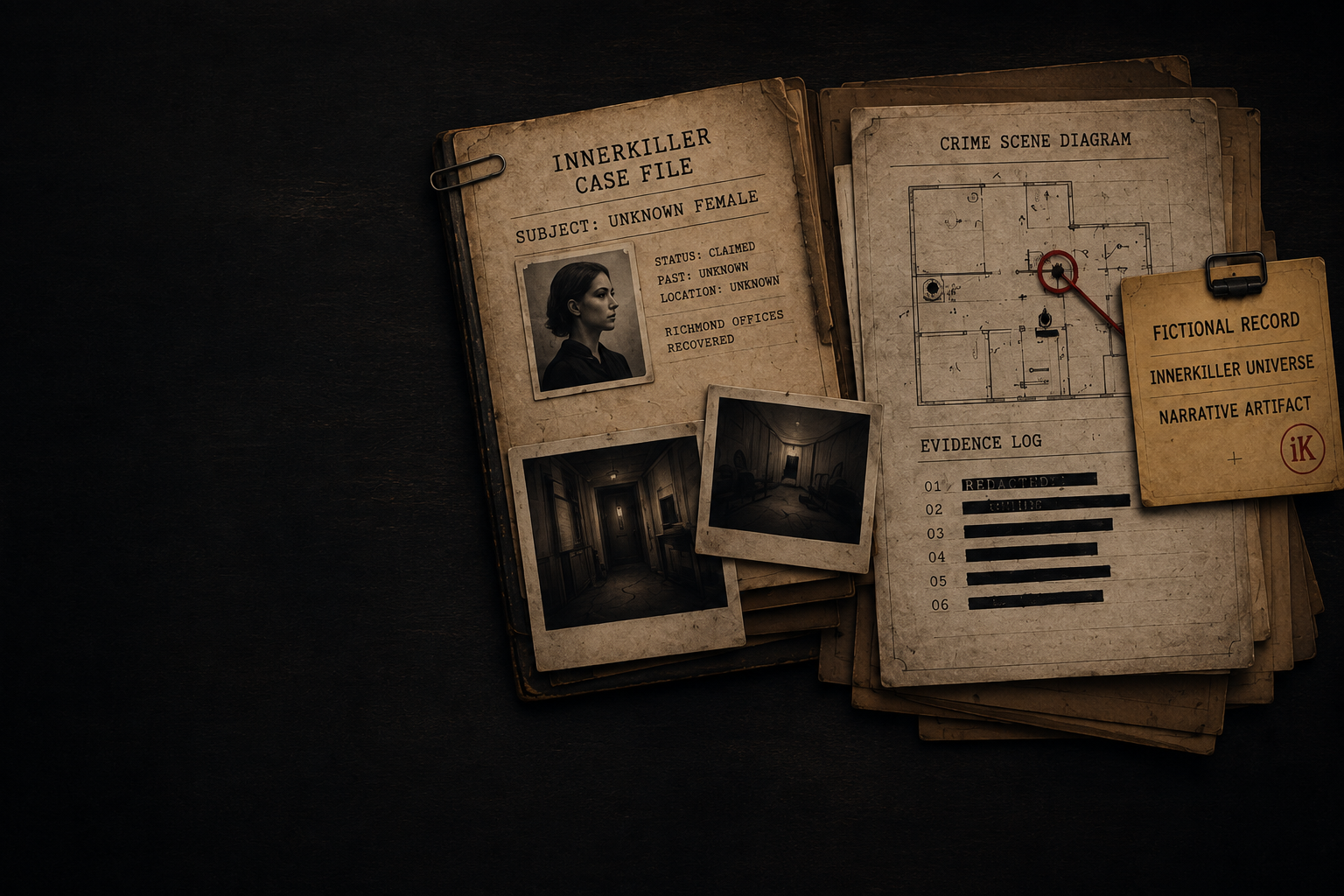
InnerKiller borrows the visual language of archives, dossiers, investigations, morgues, forensic examinations, and case files to create an immersive fictional world.
That presentation can intentionally blur the aesthetic line between story and artifact.It does not blur the factual one.Toe-Tagged Tales remain fiction.iKProfiles remain fictional character concepts.The Morgue is a storytelling environment.The Crime Lab is an interactive narrative environment.
LEGAL ISN'T THE ONLY STANDARDSomething Can Be Legal and Still Not Belong Here.
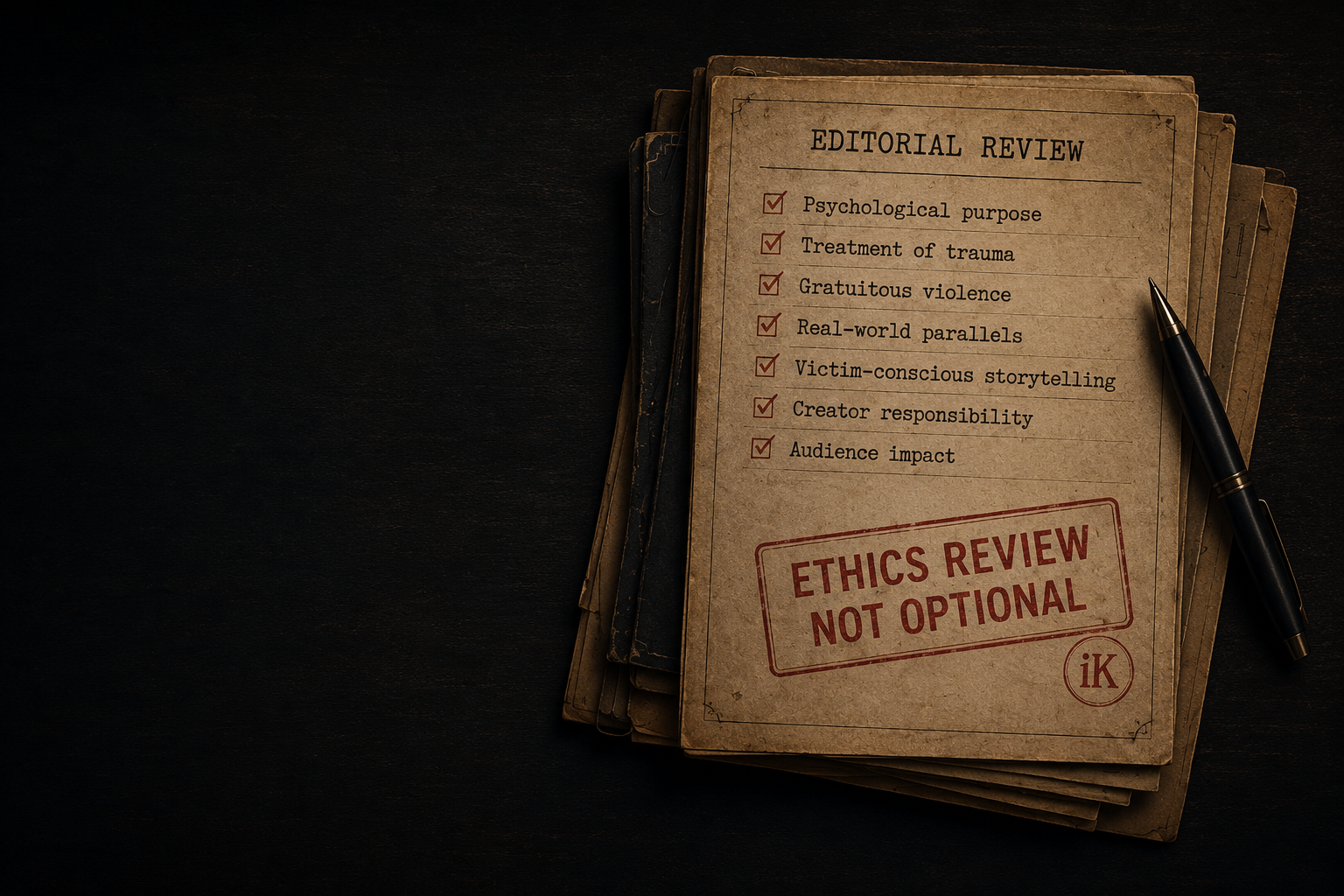
Legal asks:
“Can we publish this?”
Editorial ethics asks:
“Should we?”
Those are not the same question.
YOUR SIDE OF THE FILECreative Freedom Comes With Boundaries.
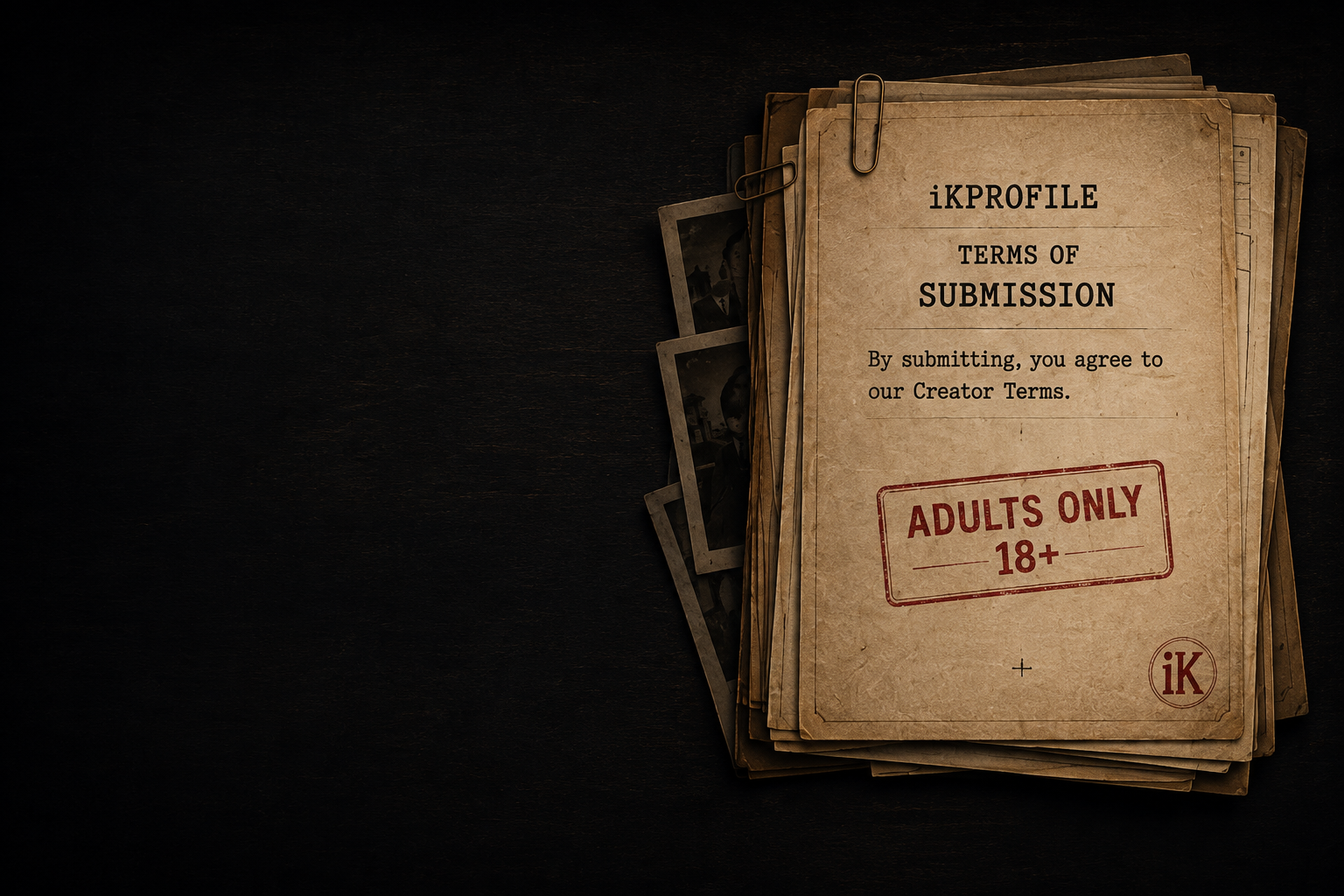
If you're submitting an iKProfile, you're entering the universe as a creator, not merely a reader.
That means your contribution needs to follow the same principles that govern our published work.
ORIGINAL
Created from your imagination rather than copied from another work or recognizable person.
FICTIONAL
Not a confession, disguised accusation, or recreation of an actual criminal case.PSYCHOLOGICAL
Built around identity, motive, pressure, contradiction, and consequence.RESPONSIBLE
Created for storytelling rather than real-world harm.
THE QUESTIONS EVERYONE THINKSCourt Is Not in Session.
But Go Ahead.
-
Generally, creative fiction enjoys broad First Amendment protection in the United States, including fiction dealing with disturbing or violent subjects. That does not mean every conceivable statement or publication is immune from other laws.
-
Toe-Tagged Tale characters and iKProfiles are intended to be fictional. InnerKiller's editorial rules prohibit recreating identifiable real people or actual criminal cases as fictional submissions.
-
Coincidences can happen, but creators should not intentionally disguise a real person as a fictional character. Concerns involving identifiable people can raise issues beyond the simple fiction/nonfiction distinction, which is one reason InnerKiller maintains strict originality rules.
-
No. The platform explores violent and psychologically difficult behavior through fiction and editorial analysis. It does not exist to promote or facilitate real-world harm.
-
Because immersion is part of the storytelling.
The dossiers, case files, morgue language, investigation interfaces, and forensic visual systems belong to the fictional InnerKiller environment.
-
No. Blacklight Files are nonfiction editorial pieces examining real psychological and cultural subjects. They should be clearly distinguished from fictional Toe-Tagged Tales.
-
No. iKProfiles should be original fictional constructs, not vehicles for targeting, threatening, embarrassing, or depicting identifiable real people.
-
No. It explains InnerKiller's general editorial practices and approach to fictional storytelling. Specific legal questions should be addressed by qualified counsel familiar with the relevant facts and jurisdiction.
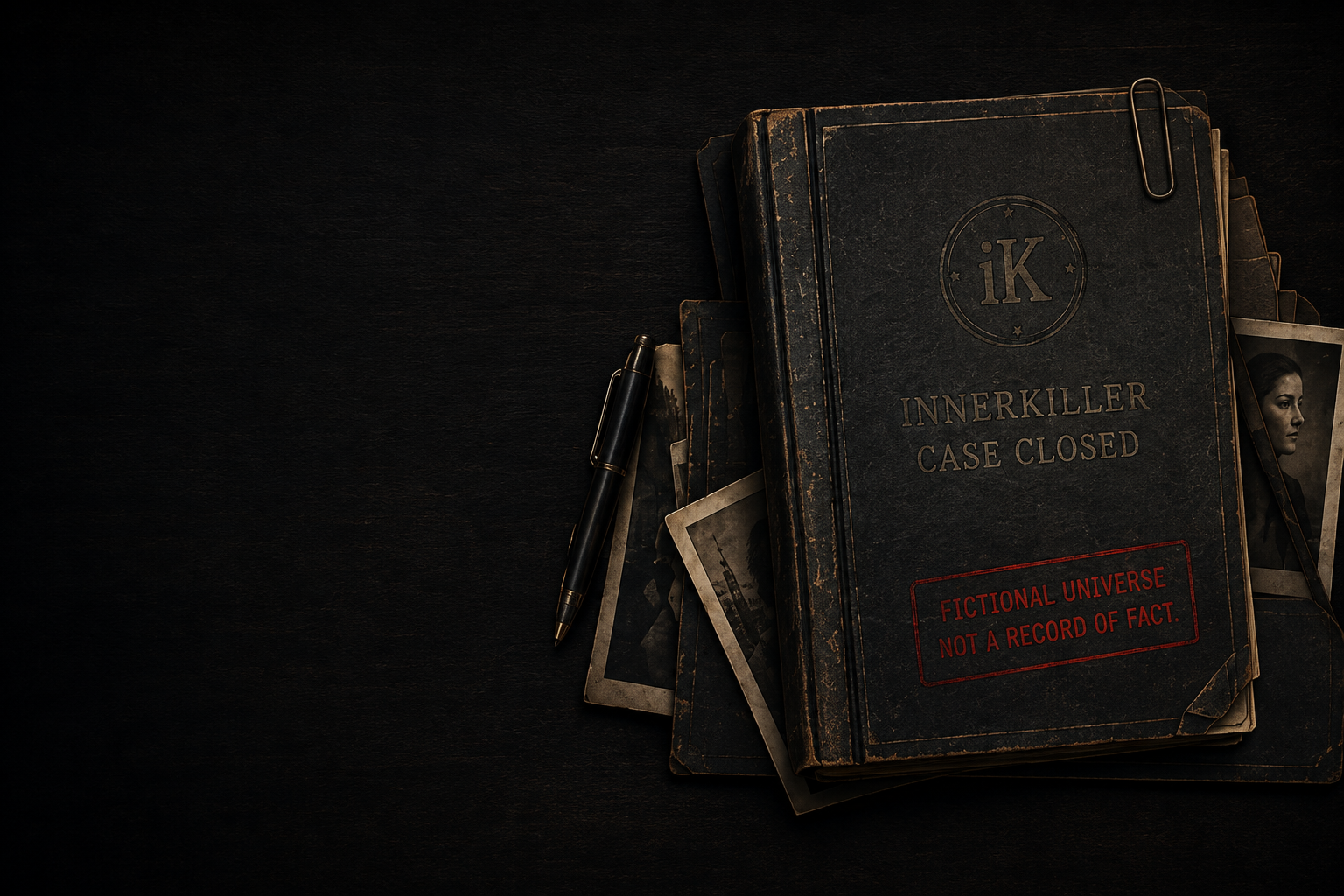
CASE CLOSEDThe Darkness Is Fictional.
The Standards Are Real.
InnerKiller exists to explore the uncomfortable parts of human psychology through story.
We can create terrible choices without endorsing them.We can write complicated women without celebrating everything they do.We can make a fictional universe feel unnervingly convincing without pretending it actually happened.
And we can do all of that while maintaining clear creative, ethical, and editorial boundaries.
InnerKiller is fictional storytelling for mature audiences. Nothing on this page constitutes legal advice.