Gaslight Nation: How Manipulation Culture Breeds Modern Monsters
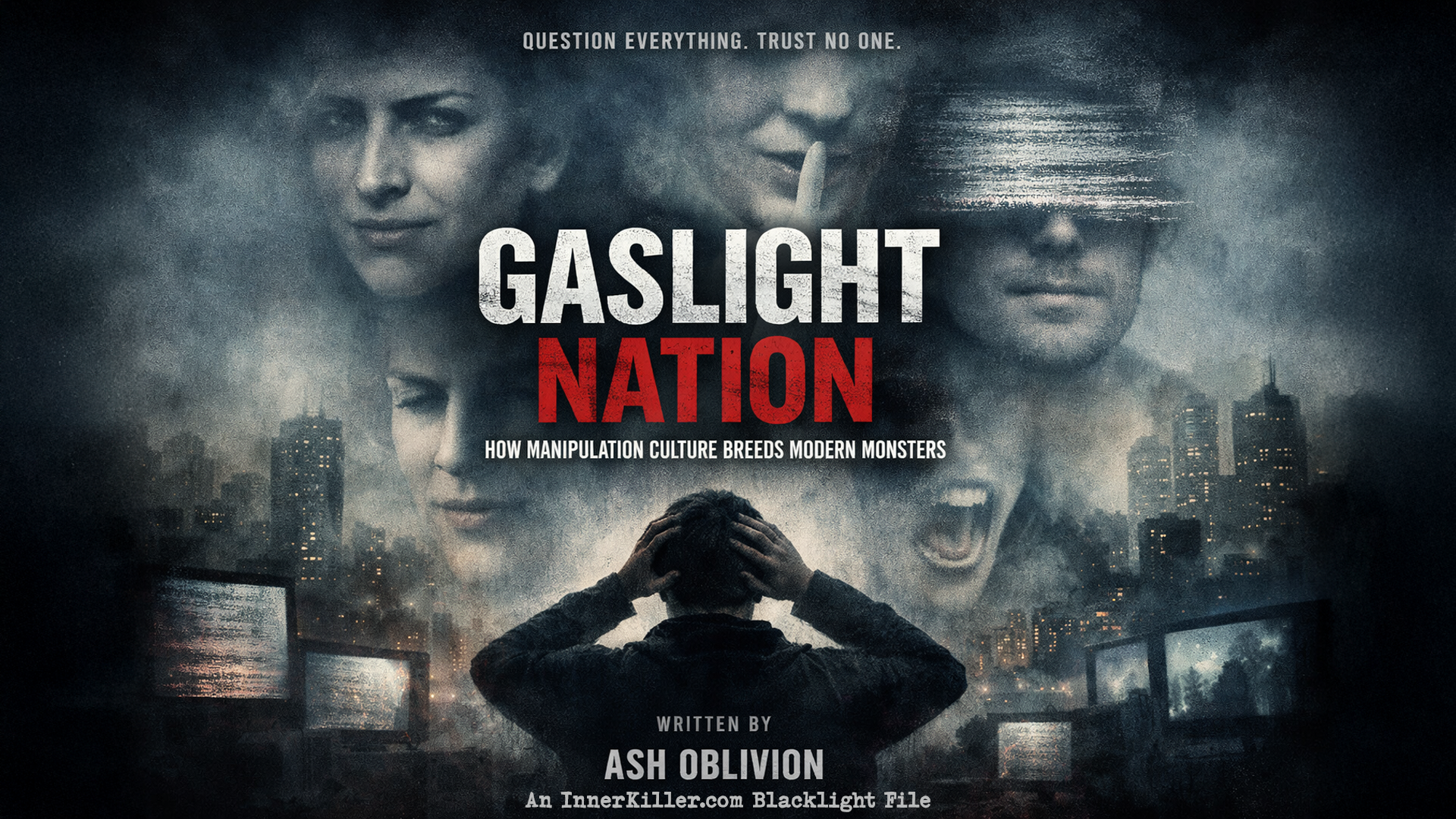
Gaslighting is often described as a tactic one person does to manipulate another, but tactics don’t spread on their own. Cultures do.
We live in a moment where reality is frequently contested through repetition, denial, and strategic confusion. This environment doesn’t just obscure truth, it trains people to doubt their own perception and intuition. When that doubt becomes woven into media, institutions, and interpersonal dynamics, it stops being a private harm and becomes a public condition. This is what is meant by Gaslight Nation.
From Behavior to Atmosphere
Originally used to describe intimate psychological manipulation, gaslighting has expanded far beyond private relationships. Today, it appears in corporate responses to harm, public denials of documented abuse, and media ecosystems that reward controversy over clarity. What makes cultural gaslighting distinct is the scale. Instead of one voice denying another’s experience, many voices repeat the same distortion. Over time, this repetition becomes exhausting. The question shifts from Is this true? to Is it even worth knowing? That erosion of certainty carries the possibility of dangerous consequences.
The Psychological Cost of Persistent Doubt
Human beings rely on shared reality to regulate behavior, memory, and accountability. When experiences are consistently questioned or reframed, the nervous system adapts. Hypervigilance increases, trust erodes, and silence becomes safer than contradiction. Importantly, this does not create monsters in a dramatic sense. It creates conditions where harm can persist unnoticed, unchallenged, or as misunderstanding. In these conditions, individuals with exploitative tendencies encounter less resistance, not because they are powerful, but because the ground beneath truth is unstable. Understanding this is not about assigning blame to culture for individual acts, It’s about recognizing how environments shape what goes unchallenged.
Manipulation Without Villains
One of the dangers of true crime narratives is the temptation to isolate harm within a single figure. Gaslighting culture doesn’t require a mastermind. It operates through incentives; what is rewarded, what is dismissed, and what is ignored. When credibility is treated as subjective and harm as debatable, responsibility becomes negotiable, especially on the internet, where it is easy to squelch or block those who try to defend themselves. This is where ethical distance matters. Studying manipulation culture does not mean centering perpetrators. It means examining the systems that allow denial to function smoothly and repeatedly.
Media, Curiosity, and Quiet Harm
Curiosity about wrongdoing is not inherently unethical. But when curiosity is fed without context, it can unintentionally reinforce distortion. Sensational framing simplifies complexity, and overexposure without grounding numbs responses. In both cases, the result is the same:; understanding is replaced by consumption. Blacklight Files exists to interrupt that pattern, by slowing the gaze, restoring proportion and refusing spectacle in favor of clarity.
Holding Reality Steady
Recognizing gaslighting as a cultural force invites a different kind of responsibility. This gives attention to framing instead of vigilance for villains. Reality does not need amplification, it needs steadiness. As readers, witnesses, and participants in shared narratives, the work is to resist the erasure of harm, to notice when confusion is manufactured and to understand discomfort as a signal. This is not about fear, it’s about seeing clearly under steady light, and choosing not to look away when clarity feels inconvenient.