When Devotion Becomes Surveillance
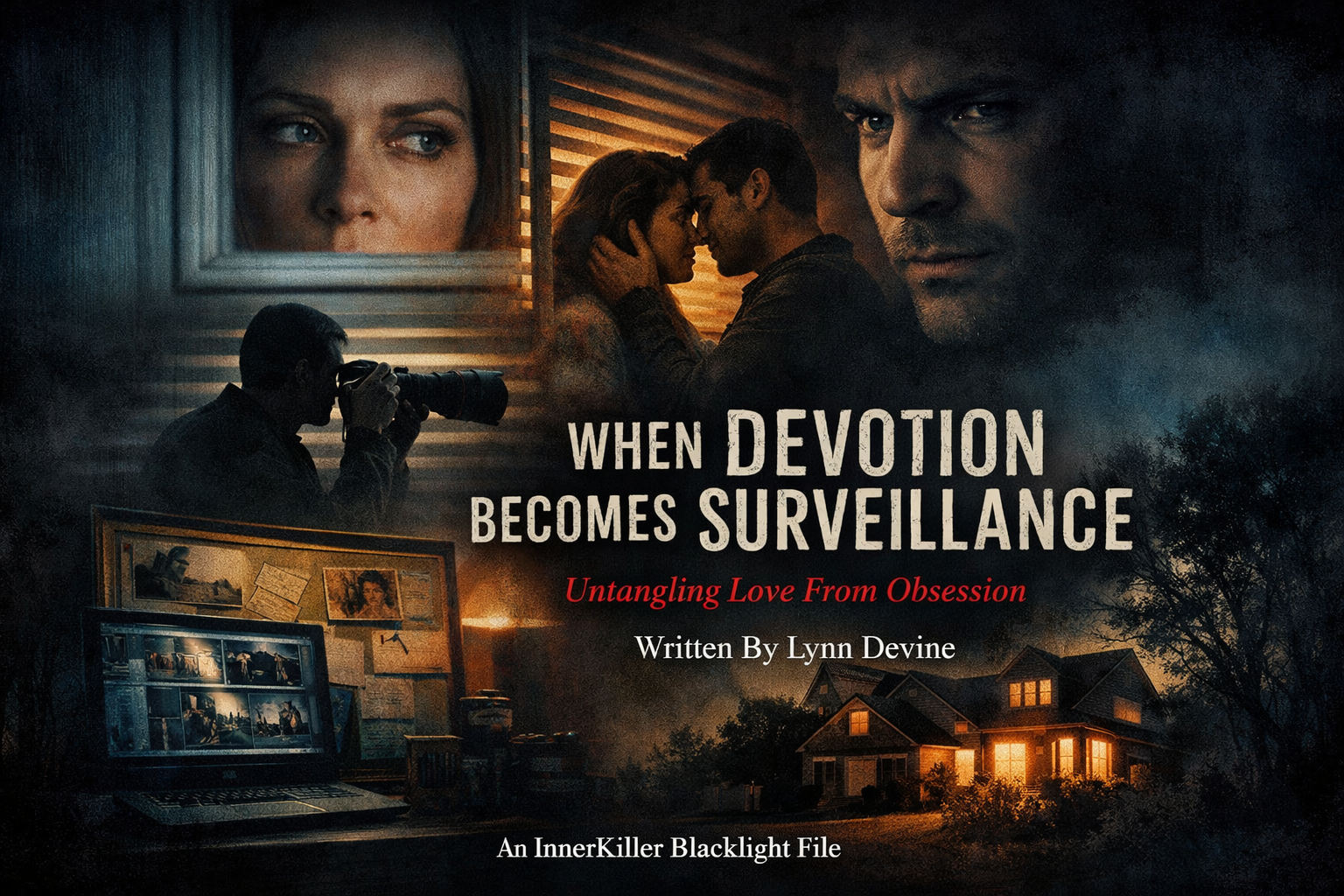
When Affection Stops Being Mutual
The word love carries cultural weight. It implies care, reciprocity, and recognition of another person as separate and sovereign. Obsession, by contrast, is not defined by connection but by fixation. Yet the two are often confused—by observers, by media narratives, and sometimes by the individuals experiencing them.
This confusion matters. Not because every intense feeling is dangerous, but because mislabeling fixation as romance blurs ethical boundaries. It softens behaviors that should be examined with clarity and distance. Under steady light, the distinction becomes less sentimental and more structural.
Limerence: Intensity Without Intimacy
Psychologists use the term limerence to describe an involuntary state of intense romantic fixation characterized by intrusive thoughts, idealization, and a deep craving for reciprocation. Limerence can feel overwhelming, euphoric, even profound. But it is not built on mutual knowledge. It feeds on fantasy, uncertainty, and projection.
Unlike love, which develops through shared reality, limerence thrives in gaps—limited access, ambiguous signals, imagined closeness. The object of affection becomes a canvas. Their autonomy fades as the internal narrative grows louder.
Understanding limerence is not about pathologizing desire. It is about recognizing when intensity replaces intimacy, and when longing becomes a substitute for relationship.
Obsession Disguised as Care
In its darker expressions, fixation adopts the language of devotion. “I just worry.” “I need to know you’re safe.” “No one will love you as I do.” These phrases sound protective, even tender, until examined for consent and reciprocity.
Obsession is unilateral. It centers the fixer’s emotional regulation, not the other person’s well-being. Attention becomes surveillance. Persistence becomes entitlement. What is framed as sacrifice often conceals control.
This is why cultural myths are dangerous. When persistence is celebrated as romance, refusal is reframed as a challenge rather than a boundary. The story shifts from mutual choice to inevitable conquest—an arc that erodes consent without announcing itself.
The Stalker Mindset Without the Spectacle
Public understanding of stalking is often shaped by extremes: shadowy figures, dramatic confrontations, and overt threats. In reality, many fixation-driven behaviors appear mundane. Repeated messages. Coincidental encounters. Excessive monitoring under the guise of concern.
Blacklight Files avoids reenactment for a reason. The harm of obsession does not require spectacle. It accumulates quietly, through pressure, fear, and the steady narrowing of another person’s freedom. The ethical issue is not fascination, but proximity—how close curiosity drifts toward normalization.
Trauma, Attachment, and Misread Signals
Not all fixation emerges from malice. Attachment wounds, abandonment fears, and unresolved trauma can distort how connection is sought and maintained. Cultural scripts that equate jealousy with passion or exclusivity with devotion further muddy the water.
Acknowledging these influences does not excuse harm. Context explains; it does not absolve. Ethical analysis requires holding both truths at once: understanding the psychological roots of fixation while maintaining clear boundaries around behavior.
Why This Distinction Matters
When obsession is mislabeled as love, the cost is not only personal—it is cultural. Survivors are pressured to reinterpret fear as flattery. Media narratives reward pursuit over respect. Curiosity slides into complicity when harmful dynamics are framed as romantic inevitabilities.
Clarity restores agency. It allows intensity to be questioned without shame, and affection to be defined by mutuality rather than endurance.
Closing Under Steady Light
Love is relational. It recognizes limits. It allows distance without collapse. Obsession cannot tolerate separation because it is not anchored in the other person—it is anchored in need.
Understanding this difference is not about suspicion or moral panic. It is about precision. Under steady light, we can examine fixation without glamorizing it, acknowledge curiosity without feeding harm, and return the concept of love to where it belongs: shared, chosen, and free.