Caregiver
⚠️ Trigger Warning:
This story may include references to physical and emotional abuse, medical neglect, psychological trauma, and moral violence. Reader discretion is advised.
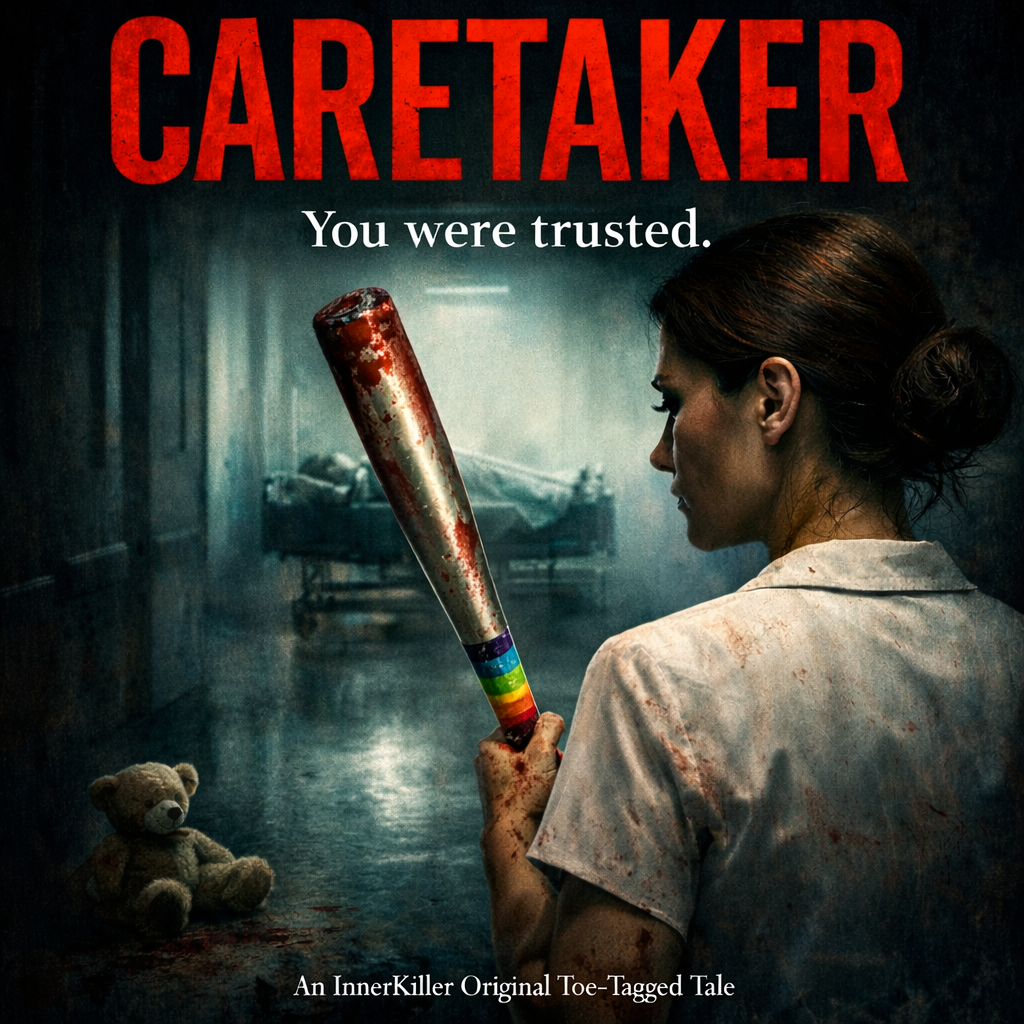
Chapter 1 — Intake
Comfort. The woman in blue scrubs kept saying the word like it could sand down anything ugly into smooth silk. Ramona sat with her purse on her lap and her knees together, looking like the kind of relative everyone had; the kind who clipped coupons and brought diced fruit to parties in plastic containers. She let her mouth soften politely while her eyes moved over the room, touching each thing once in her mind and keeping it.
The care home had once been a ranch house. It could still be felt under the laminate flooring and the bright overhead lights. A family place stretched thin until everyone moved out and it lost all connection. It smelled like a strange, reheated soup, bleached old carpet, and the sweet medicinal film of crushed pills. A television murmured from somewhere further down the hallway, too loud for comfort.
“We really pride ourselves on individualized attention here,” the woman in blue scrubs said loudly.
Her badge read DANIELLE in bright letters, though the edges of the plastic were cloudy with wear.
“Your aunt would have one-on-one support during all waking hours,” she continued.
Ramona nodded as if that mattered most. She had chosen an aunt because mothers invited pity and sisters raised questions. An aunt sounded manageable.
“She startles easily,” Ramona said. “Loud noises upset her. Being moved too fast upsets her more.”
Danielle smiled, although Ramona could tell she was already done listening.
“Of course. We are very trauma-informed,” Danielle said sternly.
The word trauma sent a shiver down Ramona’s neck. She looked over Danielle’s shoulder to an old recliner in the corner of the room. It was positioned near the window as if sunlight could do half the labor of healing. There was a strip of gray residue on the chair arm, sticky enough to catch dust, shaped like something torn away. She stared at it a second too long. The room seemed to become eerily small. Danielle followed her gaze and gave a little laugh.
“Oh, that. One of our residents likes to pick at the upholstery, so we patch things now and then.”
Patch. The word drifted across Ramona’s skin like a lit match. She pressed her thumbnail into the side of her finger until the small sting steadied her.
“With what? Duct tape?”
“It is temporary,” Danielle said. “You know how these places are. We make do.”
Ramona knew exactly what these places were like. She knew the language of corners cut clean enough to pass under fluorescent light. She knew how neglect was disguised as understaffing, then as burnout, then as funding cuts, then as nobody’s fault. She looked at the residue on the arm of the chair again and imagined the sound it must have made when the tape came off; not the full rip, just the first tacky peel. Ramona’s shoulders shuddered just imagining the noise.
An older man in a wheelchair sat at a dining table in the next room. He stared at a paper bib folded into the collar of his shirt. A water cup was just beyond the reach of his hand. He nudged at the table with his knuckles, just hard enough to make a soft sound that nobody heard. No one was listening for it. Ramona watched Danielle as she continued on, not noticing the man. She looked around for other staff who were working. There was no one; nothing but the wall calendar beside the medication cart, the black marker circles around staff schedules, the names crossed out and replaced. She watched a woman in slippers shuffling slowly near the hallway, one sock half off her heel. An aide walked slowly behind her and scrolled on her phone with one thumb.
“Hold on, sweetheart,” the aide said without looking up.
“How many overnight staff do you have here?” Ramona asked.
Danielle straightened her stance, grateful for a normal question.
“Two, usually, a med nurse and staff aide.”
“Usually?” Ramona replied.
Danielle tipped her head as if she could shake the answer out of one ear.
“Well, one and a floater if someone calls out.”
“How often does someone call out?”
The smile on Danielle’s face thinned.
“You know how hard hiring has been since the pandemic.”
Ramona let a beat pass. She had learned long ago that silence made careless people rush to fill it. Danielle did, of course.
“But we are all very dedicated. This work takes a special kind of heart.” She said as her smile returned.
Ramona almost smiled back, because these places never changed. Staff pretended to care because it made them feel better about themselves. Everyone with blood under their nails wanted to talk about having heart. She asked for a bathroom, and Danielle was happy to point the way to their state-of-the-art remodeled powder room.
Ramona quickly looked over her shoulder and walked past the bathroom. She wandered farther down the hall than she needed to. One door was cracked open. Inside, a woman lay on her side in bed with the blanket twisted tight around her calves. Her call button cord looped once around the bedrail and dangled to the floor where the woman’s frail hand with swollen knuckles could never reach it. Three framed photographs sat turned face down on the dresser. It looked as though someone had put them there on purpose. Ramona moved on.
She made her way back to the bathroom. Ramona shut and locked the door behind her. She stood with both hands resting on the sink. The mirror had been cleaned, but badly. There were streaky arcs in it where the cleaner had dried out mid-swipe. She looked ordinary in that glass; she wore a sturdy coat, smooth hair, nude lipstick on a soft mouth. The woman in the reflection was tired from carrying too much for too long. She opened her purse and took out a receipt, a pen, and the folded copy of the state inspection report she had printed that morning. The report had three medication discrepancies, two anonymous family grievances, and one staff member, D.H., who was mentioned twice and was never formally cited.
The pen hovered over the receipt, but Ramona hesitated. She thought aloud to herself.
“Not yet.”
When she came back into the hallway, Danielle was watching the man at the table with his lunch tray. To say she was helping was generous, but she looked distracted. She pushed the cup toward him with two fingers and checked her phone just when he fumbled for it. Water spilled into the man’s paper bib, darkening it in a spreading bloom and moistening the shirt underneath.
“You have to meet me halfway,” she said, in a flat voice.
She kept her cheerful voice for when a tour was being given. Ramona felt an old, familiar feeling come over her. She shook it off and tried to remain calm. She stepped forward, lifted the cup of water, and held the straw to the man’s mouth with one hand while steadying his wrist with the other. His sad eyes looked up at hers, wary at first, but also grateful in the small, embarrassed way dependence often felt.
“He does that for attention,” Danielle said as she gave a brittle laugh.
Ramona set the cup down carefully on the table.
“Does he?”
There was no challenge in the words, but Danielle had a quick answer for everything.
“Families come in for ten minutes and think they understand everything. Everyone here has a side they don’t show the public.”
Danielle briefly glanced toward the hallway with a look of dread, as if she were bracing for something bad to happen. The look was ugly, and strangely familiar. Ramona had seen that same look of exhaustion on grocery clerks, receptionists, and attendants counting coins in gas station parking lots. Ramona saw the wear and tear on her. Danielle had chewed cuticles. There was day-old foundation caught in the seam of her jaw. A tiny stain marked the cuff of one scrub sleeve, brown at the center, old enough to have survived a wash.
She looked tired, yes. Underpaid, probably. Frayed around the edges. Ramona knew those women, too. She also knew when tiredness leaned into permission to harm. Being a nurse might be difficult, but it did not excuse a single thing in the care home. It made the place feel old and rotten.
“I want to thank you for your time,” Ramona said.
The phrase relieved Danielle so visibly it bordered on celebration. She walked Ramona back to the front of the building and started talking again about memory care enrichment, dietary flexibility, online family portals, all the soft-padded language that stopped people from asking questions. At the door, Ramona shook her hand. Danielle’s palm was dry, cold and disturbingly rough, which worried her.
Rain pressed a fine mist over the parking lot outside. Ramona ran across and quickly opened the door to her truck. She sat for a few moments without starting it. The steering wheel was cold under her fingers, but not as cold as Danielle’s handshake. From her coat pocket, she took an index card, the good thick kind she also kept wrapped in a rubber band in the glove box. She wrote in steady block letters.
CARETAKER. YOU WERE TRUSTED.
She slid the index card back into her coat and patiently watched the building until Danielle walked out the side staff entrance for a cigarette break.
Chapter 2 — What the Camera Saw
The kitchen drawer caught on something for half a second before it gave. Ramona took out a roll of packing tape in one hand while the other braced flat on the counter. Her sister, Lily, hummed to herself in the living room like nothing in the world had ever been anything but sunshine.
The house held onto sounds strangely when it rained. The windows dripped condensation at the corners. The old refrigerator clicked and whirred. Lily’s humming drifted in and out, matching the tune of a game show she watched. Her voice was almost painfully pretty. Ramona set the tape down beside a shipping box and glanced down the hallway. The hall closet was where she kept things she did not need, locking them away until she needed them so badly she could not breathe.
She had told herself it was gone, corrupted. Lost, buried under junk and time and the useful lies women tell when they are overwhelmed but want to keep functioning. Ramona stood in front of the closet and hated her own hand for knowing where to reach; past the spare lightbulbs and the winter blankets into a small tin with seed packets and expired batteries. The flash drive was inside an empty prescription bottle with the label peeled off.
Lily laughed at something on the television. Ramona shut the closet door with her hip and took the prescription bottle to a desk in the corner of the dining room. Her laptop was old and slow to wake, but its screen was so bright that it lit the entire hall. She debated whether she should actually look at it as she sat down, then stood again, then sat. Her hands were cold. She rubbed her palms rapidly over the legs of her jeans to warm them and then slid the flash drive into her laptop.
A red dot appeared as a thumbnail for a video file. That was what she had forgotten, or at least she tried. It wasn’t the footage; it was the light. A camera had been hidden inside a plug-in air freshener in Lily’s room. When the file opened, the grainy little red corner-light from the recording interface looked like an eye. She wished she could shut it. Ramona stared at it until the timestamp began to move.
The video started, and Lily’s childhood room came together piece by piece. Half of the bed, then the dresser with the crooked drawer came into view. The basket of unfolded laundry sat in a corner. A stuffed rabbit slumped on the floor with one ear bent under. Nothing happened for a while. The angle never showed the whole room, which made the waiting worse. Ramona could hear herself breathing, shallow and dry. The laptop speakers gave her something else to listen to. Cabinet doors closed, then footsteps approached as a woman’s voice came down the hallway.
“Well, maybe if you stopped acting like a baby.”
A nurse in her blue scrubs walked into the frame carrying a plastic grocery bag and Lily’s favorite blue cardigan. She dropped both of them on the bed. The bag sat for a few seconds, slowly leaning to the side before tipping over. Orange pill bottles rolled over the comforter and settled into the folds. Ramona felt the back of her neck go hot. On the screen, Lily was off-camera at first, making the low, uncertain sound she made when she was confused and trying not to cry.
“Sit down,” the nurse demanded.
Ramona clicked the pause button so quickly that the laptop rocked backward. She tried to concentrate on the room around her. Rain tapping on the gutter, Television applause and pre-recorded laughter. Lily humming through her teeth now, softer than before, with concentration. Ramona pressed her palms to her eyes until colors sparked in the darkness. When she pulled her hands away, she could still see the red dot on the screen. She started the video again.
Lily moved into frame, looking very disheveled. She was wearing one sock and no shoes; her hair was half-brushed and pulled back crooked behind one ear. A young nurse came into view and shoved Lily violently toward a chair, nearly pushing her through the window. She laughed when Lily covered her face.
She looked smaller on camera than Ramona remembered. That part always got to her. Grief would have made more sense if it came as something grand, but usually it was just this. The unbearable size of a body you would have died to make bigger. She had been carrying Lily since she was twelve years old. That was back when their mother disappeared for days at a time, and their father slept through the screaming in a recliner that smelled like beer and stale cigarettes.
“Cut it out. You’re making this harder than it has to be,” The woman in the video said.
The roll of tape came out next. Silver-gray industrial duct tape; the kind Ramona kept in the shed because it was cheap, and the tape split at the edges, leaving threads poking out. The woman pulled the first strip as it made a clean ripping sound. Ramona’s stomach turned over so violently that she had to grab onto the table. On the screen, Lily flinched before the tape even touched her, which meant it had probably happened before. She did not know how many times.
Ramona remembered the whole room. The smell of the air freshener cartridge going powdery in the outlet, the damp cuff of Lily’s sleeve, where she had washed her hands and not dried them. The glow of late-afternoon heat at the windows. Her memory came as a story of surfaces. Tape over fabric, a chair with the leg scraping against the floor.
“You might as well stop. You know what happens, and nobody’s going to know. No one can help you,” The nurse said softly, gritting her teeth.
Her voice was flat and harsh like she had smoked too many cigarettes. Lily did not fight much in the footage; that was the worst thing. She turned her head, she whimpered, and she tried to pull one wrist free after the nurse bound it to the arm of the chair. When she could not free herself, she started rocking and humming softly under her breath. It was the same tune as the one in the living room. Ramona’s mouth opened without a sound.
The nurse crouched in front of Lily, smiling with all her teeth.
“Good girl,” she said. “See? I knew you could behave.”
The grocery bag on the bed rustled as she stuffed more pill bottles inside it. One bottle fell out and rolled to the floor and out of the frame. The nurse never picked it up; she just kept talking, but to herself more than to Lily. She was angry about rent, the hours that were cut, ungrateful people. They wanted miracles for fourteen dollars an hour. She stood, leaned down close enough that Lily recoiled, and pinched her cheek hard between her thumb and two fingers.
Ramona paused the video again, holding back her anger and her tears. She noticed in the next room, Lily’s humming stopped. Ramona turned to see that Lily had wandered to the doorway without her noticing. She stood in her house slippers and an oversized T-shirt, looking at a workbench through the window beyond the dining room, where her Louisville slugger leaned in the corner behind a crate of potting soil. She walked past Ramona, opened the door, and walked through the yard to the garden. Ramona watched in shock as Lily’s fingers lifted to the strip of rainbow grip tape around the bat handle. Lily touched it once, lightly, then again, as if testing the texture.
Ramona slammed her laptop shut. The sound of it made Lily jump from across the yard. Both sisters froze there, looking at each other, caught in separate times. Lily blinked and smiled in an absent, forgiving way. It made Ramona feel nearly skinned alive.
“Pretty,” Lily said, sliding her fingers across the rainbow tape.
Ramona swallowed, but her throat felt foreign to her. She got up and crossed the yard quickly, then gently moved Lily’s hand and held it between both of hers. Lily’s palm was warm, and there was a crescent of dirt beneath one fingernail from the greenhouse. She was so ordinary and alive. She was simply there.
“It’s okay,” Lily said.
She could not have known what answer she was giving. Ramona looked over at the windows to the house, where their images reflected back in a blur. She could still hear the tape tearing from the video. She knew now that she would hear it forever. Some sounds did not fade. They built a dark space inside the body and stayed there.
Ramona bent her head over Lily’s hand until her mouth nearly touched the knuckles. When she finally spoke, her voice was so low it barely belonged to her.
“No more.”
Chapter 3 — The First Mercy
Danielle came because Ramona made it easy. That was the part she understood first, maybe even before the rest of it. People who took what did not belong to them always believed there was more lying around waiting. All you had to do was leave the right door cracked.
The greenhouse shed sat behind the house under an old cedar tree that bled brown water when it rained. Ramona had cleaned the shed that afternoon with the same attention to detail she used on the greenhouse shelves every spring, sweeping up potting soil, coiling extension cords and hanging tools by size and use. The order grounded her. The bare bulb overhead buzzed faintly when she switched it on, and the light made everything cast long, dark shadows on the walls. Even the chair she had set in the center of the room with its metal legs loomed over the rubber mat.
Danielle stepped through the side gate at seven forty-three, carrying her phone in one hand and a little impatient crease between her eyebrows. Ramona had texted from a burner, posing as the daughter of a former client with pills to sell cheaply and no questions asked. Danielle had not even bargained hard. She arrived in scrubs under a puffer jacket with her hair dragged back in a fast ponytail. She looked offended by the muddy yard.
“This is the place?” she called softly.
Ramona came around the corner of the shed, dressed in a dark hooded sweatshirt and dark jeans, a folded paper grocery bag in her hand.
“You came alone?”
Danielle gave her a quick up-and-down scan, dismissive and sharp-eyed.
“That was the deal, ” she said, giving a fast, paranoid glance over each shoulder.
“Good,” Ramona said.
Ramona moved before Danielle could set her face into a suspicious expression. The paper bag opened, and a wet rag covered Danielle’s mouth and nose. She thrashed once, angrily, and drove an elbow into Ramona’s ribs. She clawed at her wrists with jagged, bitten nails. The chemical finally did its work, and her body lost the fight with gravity. Ramona lowered her to the wet grass, breathing hard through her mouth, one hand firm at the back of Danielle’s head so it did not crack on the stepping stones.
The rain had thickened by the time Danielle woke. It drummed on the metal roof of the shed in an even, musical pattern. Danielle’s body sat half-upright in a chair, her wrists bound to the metal armrests, ankles taped to the legs, and her chest cinched once across the ribs with the familiar industrial silver-gray duct tape that shone dull under the overhead light. Her mouth was free; Ramona had considered otherwise, then changed her mind. She wanted to hear the shape of the panic. She wanted the woman to say things that could never be unsaid. Danielle’s eyes snapped open, and she saw the shelves first, then a shovel by the wall, then Ramona’s silhouette standing two feet in front of her with the rainbow-taped baseball bat resting against a ceramic pot.
“What… the fuck… is this?”
Ramona did not answer. Her own pulse had settled into a thick beat. She could feel it in her wrists where Danielle had scratched her. She could feel the dull ache where Danielle had struck her in the ribs; a blunt purple bruise had bloomed under her sweater. The pain was proof the body was present and would carry this where it needed to go.
“Do you know who I am?” Danielle asked. “Do you have any idea what kind of trouble you are in?”
Ramona looked at her face and felt a strange disappointment at how ordinary cruelty looked when the woman was frightened. No glamour flashed through it, no dark revelation. Just a woman with old mascara in the corners of her eyes and bad skin hidden under drugstore makeup. She was already sweating through the collar of her scrubs.
“Yes,” Ramona said. “I know exactly who you are.”
Danielle stared at the bat, then, as if only now understanding that objects could hold meaning.
“Listen,” she said, softer and more practical. “If this is about money, I can get money.”
She cleared her throat, swallowed, and tried to straighten in the chair, though the tape across her ribs made it impossible. One of her shoelaces had come untied during the struggle, and the lace tip was dark with mud from Ramona’s yard. A cheap silver charm bracelet knocked faintly against the chair arm when she moved, the kind sold near pharmacy registers beside hair ties and gum. Ramona hated noticing things like that. Ordinary little purchases, ordinary little vanities, and still this woman had looked at Lily’s helplessness and found room inside it for theft and abuse.
Ramona bent and picked up a makeshift blindfold from the workbench. It was an old strip of black flannel cut from one of Lily’s winter pajama sets, washed until it had gone almost frayed at the edges. She had not planned it, but her hand had just reached for it. She hated herself a little for the softness of it.
“No,” Ramona said. “It is not about money.”
She heard Lily’s house slippers tapping on the back steps. There was a brief pause at the threshold, where she always stopped to judge the light and cold. Ramona turned and opened the garden shed’s door halfway. Lily stood in the rain-dark yard in Ramona’s oversized cardigan, one sleeve swallowing half her hand, hair damp around the temples because she never remembered the hood. She looked sleepy and curious, although not frightened, and that almost undid everything.
“Come here,” Ramona said gently.
Lily walked through the greenhouse and stared at Danielle with concern and wonder, the way she looked at stray dogs or strange mushrooms in the yard. Danielle made a high-pitched startled sound. Recognition moved over her face like something rotten boiling to the surface.
“No,” she said quickly. “No, no, no. I know her. I know this girl.”
Ramona took the bat and held it out towards Lily. The rainbow grip tape brightened under the fluorescent lightbulb, childish and obscene against all the gray from outside. Lily touched the bat first with one finger, smiling faintly at the colors. She then curled both hands around the handle as Ramona guided them there. The bat sagged with its own weight. Lily held on anyway.
Danielle began crying in earnest.
“I was having a hard time,” she said. “You do not understand. I was drowning. They give us too many people and no help, and she would not stop; she just would not stop crying.”
Lily looked at the woman, then up at Ramona.
“Rain loud,” she said.
It broke the scene open and made the moment real. The roof rattled above them. Water traveled down the inside of a dirty windowpane. Ramona could smell wet cedar, and the medicinal sting still clinging to Danielle’s skin. She thought, with a clarity so bright it felt divine. She, herself, was the only one to ever come to her side when Lily cried.
Ramona stepped behind the chair with Lily. She lifted the flannel blindfold and tied it over Danielle’s eyes, knotting it at the back of her head so the woman would feel the touch but not see the hand. Danielle bucked against the tape and the chair, whimpering and grunting, her breath sawing in and out.
“Please,” she said. “Please, I am sorry. I am so sorry.”
Ramona placed her hands over Lily’s hands holding onto the bat. Lily was warm and trusting in front of her, smiling. Danielle was shaking uncontrollably in the chair. Ramona, carrying the only strength that mattered, brought the bat up.
“Close your eyes,” She whispered in Lily’s ear.
Danielle cried out Lily’s name in desperation as Ramona swung.
The first sound was not the worst, but it was hard and wet. The wooden bat struck her flesh with a blunt force, leaving a deep indentation. Danielle screamed and twisted sideways; the chair's legs shrieked as they slid across the floor. Lily flinched at the noise, but she kept her eyes closed and did not let go of the bat. Ramona tightened her grip over Lily’s small fingers, pulled the bat back, and swung again, harder this time. Danielle’s head seemed to collapse inward, and her shoulders became limp. The sounds blurred the impact into chaos; erratic breathing, rain pounding on the roof, the weak metal rattle of a lawn chair losing its battle with a heavy body.
By the third blow, Lily had started humming. Ramona did not know whether Lily was soothing herself or if her mind had drifted somewhere else entirely. The tune moved under the violence like a sewing needle through cloth. Danielle’s limp body sagged against the duct tape restraints, barely breathing, rough and uneven, then thinner. It became wrong, like bubbles popping in a pool of lava. The bat seemed heavy in an unusual way. Ramona stood very still and watched Danielle’s chest rise once, twice, then barely at all. She eased the bat from Lily’s hands.
“Inside,” Ramona said, but softly, as if speaking in church.
Lily obeyed at once. She walked back through the pouring rain to the house, humming along, her slippers dark with mud. She looked once over her shoulder and smiled at Ramona.
Danielle’s body convulsed and then was still. Ramona cut the tape from the chair and let her bruised and broken body slide to the floor. She left her there with the blindfold still on. It mattered to Ramona that the woman had died in that darkness, carrying the last shadow of fear she deserved. She took the bat outside and held it under the greenhouse gutter, letting the rain wash it gently. She turned the handle and watched the water change from red to pink to clear.
Chapter 4 — The Sister
The basil in the greenhouse needed pinching back. Ramona stood in damp soil with pruning shears in her hand, taking the tender tops off one by one, rhythmically dropping each fragrant green leaf into a yellow bowl. The plastic walls held the chill of the night, even after sunrise. Water beaded on the inside seams and rolled down in crooked lines. Lily sat on an overturned milk crate by the door with a blanket around her shoulders, watching a ladybug climb the toe of her muddy slipper.
When Ramona reached for the next stem, she noticed dirt lodged in the crease of her own thumb and thought it could have been a bit of dried blood. She had been careful; she scrubbed everything twice. Paranoia lived in her now with a warmth she did not trust. Danielle’s face had not followed her into sleep the way Ramona had assumed it would. There had been no grand haunting. There was only a strange spaciousness in the house, as if a machine somewhere had finally shut off after slowly grinding for years. She hated the relief more in daylight than she had in the dark.
“Too much,” Lily said, pointing at the basil leaves.
Ramona looked down. She had over-pruned one pot until the stems stood raw and awkward, all promise cut out of them.
“You’re right,” she said. “That one was too much.”
Lily smiled, satisfied by being useful, then went back to watching her ladybug. Ramona set the shears aside and pressed the pads of her fingers to a rosemary branch, inhaling the sharp, green, earthy scent. Her eyes opened, interrupting the serene moment. Tiny half-moon shapes had been cut out of the rubber mat where the chair legs had scraped against it. She had scrubbed them, but some things didn’t wash away.
Ramona guided Lily back into the house, where they both washed their hands at the kitchen sink, dirt spiraling down the drain in thin brown ribbons. Lily half-dried her hands carefully on a dish towel, then wandered toward the television, humming under her breath while the morning news talked to an empty room. The house smelled of wet soil and dish soap, though it did not mask the faint stench of fear.
Ramona glanced at the time on her laptop computer. Eight-fifteen. Her browser tabs still sat open from the night before: gardening forums beside survivalist message boards and DIY carpentry threads. She left the tabs untouched and checked her email instead. Most of her messages were advocacy notices, supply-shortage notices, and messages from caregiver support threads. There was one message marked with a red flag. An unanswered complaint from a woman asking if anyone knew how to report neglect anonymously without losing visitation access. Ramona stared at the message for a long time before closing the screen without replying.
By ten o’clock, she was at Bishop Hardware in her red vest, keys clipped at the hip, answering questions about drain snakes and weather stripping with the same steady voice she had used for years. Saturday customers moved like weather systems. A contractor with paint on both cuffs wanted lag bolts. A young mother asked which sealant was safest around pets. An old man spent fifteen minutes comparing extension cords and called her sweetheart only once, which counted as progress in April. Ramona smiled when expected, walked people to aisle twelve, lifted fifty-pound sacks of soil without strain, and felt the whole time as if she had a second spine no one else could see. Still, something unsettled her.
She had imagined a line, some internal border a person crossed and then recognized by the ruin beneath their feet. Instead, there was this. Price gun in one hand. Inventory sheet in the other. The memory of a blindfold knot sitting in her fingers as naturally as tying twine around tomatoes. At lunch, she washed her hands in the employee sink and watched the water slip over her knuckles. She closed her eyes, and she saw the hose beside the shed instead, pink drips running off the rainbow grip, and had to brace one palm against the counter until the two rooms separated again.
“Rough morning?” asked Tess from electrical, shouldering open the break room door with a can of peach seltzer.
Ramona dried her hands. “Didn’t sleep great.”
“Me neither. My upstairs neighbors bought a karaoke machine, which feels like an act of war.”
Ramona gave a small chuckle. Tess talked easily, too easily to notice when other people held back. She cracked open her can and leaned against the mini fridge.
“Did you hear about that caregiver out in Pierce County? The one they found behind the mall in a vacant lot?”
Ramona opened her lunch but did not eat. Turkey sandwich. Apple slices. Pretzels in a zip bag that she would give to Lily later.
“No.”
“It’s awful,” Tess said, already enjoying how awful it actually was. “Someone on my sister’s Facebook said the lady worked in home health. They think maybe drugs were involved. Or a client’s family snapped.”
Ramona took one pretzel from the bag and broke it cleanly in half.
“People say a lot.”
“That is true.” Tess lowered her voice anyway, which exaggerated her southern accent. “But here’s the weird part. My sister says some CNAs in a local group are acting like it was payback. Like the dead woman had it coming.”
The break room echoed with the hum of a vending machine, and an old fluorescent light flickered overhead. Ramona bit the pretzel in her hand and chewed until it turned to chalky sludge. A low knot formed in her stomach. It felt like fear arriving from a distance, but she couldn’t stop herself before she opened the door and invited it inside.
At the end of her shift, a padded envelope sat in her mailbox at an advocacy office downtown. She volunteered there on Tuesdays and Thursdays, mostly assembling resource folders, making calls that people were too ashamed or too tired to make themselves, and listening better than the paid staff had time to. The office occupied the second floor, directly above a tax service, and the hallway always smelled old, like paper dust and burnt coffee. Ramona found the padded envelope tucked between a utility bill and a flyer for caregiver respite grants.
There was no return address, just Ramona’s name, block printed. Inside was a manila packet bound with a rubber band. She carried it to the back room where donated wheelchairs sat to rust, and boxes of adult briefs and unopened nutrition shakes were stacked to the ceiling. She set the packet on a folding table and stood there looking at it. Ramona jumped at the sound of a compressor starting up in an ancient refrigerator in the corner. Through the thin wall, she could hear two volunteers discussing bus routes for dialysis patients. Life kept asking, and sometimes it just took what it needed. Some of those needs fit inside binders and intake forms. Some did not.
Ramona finally slipped the rubber band free, and a photograph slid onto the table. A bruised wrist, thin skin, beginning to yellow at the edges. Gray residue clung to the wrist near the pulse point like sticky balls of lint. On the back of the photograph was a note with no signature.
She works nights at Cedar Glen Memory Care. No one listens.
Ramona read the words twice. Then a third time, slowly, to make sure she was reading it right. In another room, a door opened and shut. Someone came in for storage labels, muttered an apology, and left again. Ramona didn’t move. Her eyes had fixed on the words. No one listens. The sentence felt like a genie granting a wish.
It was nearly 9:00 PM when Ramona carried a box of printer paper down the hall. As she neared the staff kitchenette, she stopped when she heard voices inside. Two women from intake were whispering over the coffeepot after their shift, the kind of whisper meant to be kept secret within those walls.
“I’m serious,” one voice said. “My cousin works agency shifts all over the county. She said people are talking.”
“Talking about what?”
“About someone going after the worst ones. They’re calling her ‘The Sister’.”
Ramona stepped across the threshold holding the box and nearly yelling like she had just rushed down the hallway.
“Goodnight, ladies! See you next week!”
Chapter 5 — Forced Empathy
The names came from everywhere; buried complaint threads, exhausted whispers in advocacy circles, late-night forum posts from lost daughters nobody believed before. By the time Ramona parked behind the shuttered feed store, she had already decided this name did not deserve her anger. Anger was too hot a word. It made her hands clumsy. What she felt for Marcy Bell was justice.
Marcy had worked nights with a disabled veteran named Owen Pike until his prescriptions began disappearing two and three at a time. Not enough to trigger alarms at first. Just enough to leave him sweating through sheets, begging hospice staff for relief while Marcy told anyone listening that pain made old men dramatic.
Ramona had seen the photographs in the packet, the dates scrawled on sticky notes. The copied medication logs with doses checked off in the same blue ink that later appeared on online resale posts from a fake account. The woman had been too lazy to cover the trail. Ramona had watched Marcy in the clinic parking lot just outside of Sumner for four days before deciding she had the right woman. At night, Marcy came to meet a “buyer” for diverted opiates. She arrived in a car with one headlight out and an empty child’s booster seat in the back. She did not even see Ramona until the rear passenger door opened.
“Cash first,” Marcy said as her breath fogged in the cold air.
She wore red cherry lip gloss and a white fleece puffy jacket with a home health logo stitched over the breast, as if branding could pass for innocence. There was rainbow glitter glued to the buttons of Marcy’s button-down blouse, remnants of the person she used to be, maybe from helping a child with a school project before work. Ramona held up the envelope and smiled crookedly. Marcy reached across, both curious and greedy, and Ramona took her hand, held tight and pressed a medical injector hard into her wrist. Marcy cursed, pulled back, and grabbed at her arm.
“What the hell did you do?” Marcy whispered and continued to say a few inaudible words in a slurry before slouching over, unconscious.
“Enough,” Ramona said.
Ramona got out, pulled Marcy’s limp body out of the front seat, and lowered her to the sidewalk. She covered the body in a blanket and a thin tarp and gently dragged her down the sidewalk and through an alleyway. She used all her strength to pull Marcy’s body into the back of her truck and quickly hopped in the driver’s seat and drove away. Ramona circled the block to check for witnesses. No one was around, and that was exactly why it was a good meeting place.
Three hours later, Marcy awoke. Her wrists were restrained to the arms of an old vinyl recliner with grey duct tape, and her ankles were bound with soft hospital cuffs threaded through with zip ties. A hospital monitor sat beside her, beeping steadily and chirping every so often. Marcy noticed a pulse oximeter dangling from one of her fingers, and she tried to shake it free in a sudden panic. She jerked against the restraints and looked down at herself and around the room as the fog in her head began to clear.
“No. No, no, no, no. What is this?!”
Marcy tried to scream, but the words only came out as a scratchy whisper. Ramona sat six feet away on a folding chair, with her coat still on, and a notebook balanced on one knee like a caseworker. Between them stood a rolling tray with a plastic water pitcher, a disconnected call button, an unopened blister pack of tablets, and an empty weekly pill organizer with all seven lids flipped wide open. Monday through Sunday. Nothing inside. Nothing yet.
The room had once been a storage unit attached to a defunct greenhouse supply. It smelled old and damp, like rotting fertilizer. Ramona had chosen it because it had a drain in the concrete floor and a single high window that let in a pale, indirect light, so her face was cast in a dark shadow.
“You know what this is,” she said.
“I do not! I don’t even know who you are!” Marcy screeched.
“That has never stopped you from deciding the terms of someone’s survival.”
Marcy’s confusion and fear quickly gave way to intimidation and bargaining. She tried to laugh, but only a scratchy gargle pushed out from her lips.
“Okay. Somebody lied to you. You think I took something? Say what you think I took. We can work this out,” Marcy pleaded.
Her voice snagged on the last word. Up close, she looked frazzled. Concealer sat too thick under one eye, and her eyeliner was smeared on the top lid. There was a crescent of glitter glue on the edge of her eyebrow. The problem with people like Marcy is that they don’t care about themselves, and then they neglect people at home and at work because nothing really matters to them.
Ramona looked at Marcy’s hands. Short, square nails. A nicotine stain on the right index finger. Lotion pilled at the wrists where she had rubbed it in badly. Hands that signed charts, changed dressings, opened childproof caps, pocketed relief one tablet at a time.
“Can we proceed?” Ramona said.
She picked up the empty pill organizer and set it on Marcy’s lap. The plastic rattled against the vinyl chair, and Marcy flinched as if it was heavy.
“Owen Pike,” Ramona said. “Sixty-eight. Partial paralysis after a fall. Bone metastases in the spine. Night sweats. Breakthrough pain around two in the morning. Kept asking for water because he thought if he stayed polite, someone would stop pretending not to hear him.”
Marcy went still in the face, which was answer enough.
“I didn’t do what they said,” she began, then swallowed and changed lanes without shame. “It was not like that. His family just hated me. He wasn’t missing a single pill. He had extras. People stockpile. Families always lie about counts.”
Ramona reached over and set the disconnected call button into Marcy’s restrained hand.
“Go ahead.”
“What?”
Marcy stared at the device.
“Press it when you need something.”
She pressed it, and nothing happened except a soft plastic click beneath her thumb. The second time, she pressed it harder, then kept hitting it; the sound echoed as a small, absurd sound in the spacious room. Ramona watched her. Marcy stopped and looked around as if the walls themselves had become insulting.
“This is sick.”
“Yes,” Ramona said. “It is.”
Marcy understood that nobody was coming. Ramona shifted the pressure. She gave her half a cup of water on a portable table, then rolled it just out of reach. She loosened one wrist for just a few seconds and watched panic flare in her eyes when Marcy realized she still couldn’t escape.
Ramona dragged the recliner closer to the window and left it there, near enough to feel freedom was possible and too far to matter. Marcy twisted and contorted it until sweat slicked her hairline and the chair legs knocked against the concrete in short, helpless scrapes. The false monitor kept chirping its calm little lie. When Marcy finally sagged back, gasping, Ramona saw the cruelty of the room.
Marcy began to cry in an exhausted, snot-thick way when she realized there was no audience listening.
“I got behind,” she said between soggy sobbing breaths. “My ex stopped paying support. My son needed braces. I was trying to stay afloat.”
Marcy regretfully pressed her mouth shut. Her mascara had thinned at the corners, and a strand of hair had stuck to the wet, mucous shine above her lip. She was just a woman caught at the ragged end of a ragged week. Ramona could feel empathy creeping up as the shift in perspective happened, because Owen had still suffered by the hour while Marcy did nothing to help, except help herself.
Ramona almost hated the story about braces. That tiny ordinary detail. The glimpse of Marcy’s normal life in grocery aisles, sitting in the school pickup line, up late at night with bills opened on a kitchen table. Marcy was far from innocent, but she was becoming familiar, which was worse.
Ramona imagined every woman she had ever known, doing impossible arithmetic in her head. She thought of Owen Pike sweating through a night that would not end because his caregiver, who swore an oath of protection, decided his relief was negotiable.
“Stay afloat,” Ramona repeated softly. “He could not even turn over by himself.”
Marcy pulled at her arms until the duct tape made the skin at her wrists flush deep pink.
“Please.”
Ramona stood and walked to the other side of the room. From the shadows, she lifted the bat with rainbow grip tape from where it leaned against the wall and rested its handle against her shoulder. The rainbow grip looked almost childish in the weak light, wrong in the same way a cheerful blanket looked wrong at the foot of a dying child’s hospital bed. Marcy saw the look in her eyes as she came into the light.
“No, please!” Marcy cried.
Ramona stepped behind the chair as Marcy struggled to keep her eyes locked on her. She placed one hand briefly on Marcy’s shoulder, not to be mistaken for comfort. It was to keep her steady. It was the closest thing to a warning she was willing to give.
The first blow landed high and to the side, enough to spin the chair a few inches across the concrete with a shriek from the casters. Marcy let out a sort of gargled scream but lost the shape of language. Ramona swung again, with Marcy’s eyes staring at her with pure fear. Each strike was a correction. The pulse monitor kept chirping for a few seconds after the body began to fail. Marcy’s hands went limp, the sensor slipped free from the finger, and the sound cut off.
When it was done, Ramona organized the items on the tray. She left the body in the recliner, both hands restrained with duct tape, in plain view. The dead call button still sat just out of reach. She left an index card propped against a water pitcher that magnified what was left of Marcy’s face. If anyone ever found her, it would be a gruesome sight. The card held a single line of text.
Caretaker. You were trusted.
Chapter 6 — Rain Shift
The rain had always found a way into everything. It sat in the seams of the parking lot outside Mercy Ridge Clinic, filled the potholes to a slick black shine. It gathered in the nylon seat of an abandoned transport wheelchair left beside the curb. Maybe someone had meant to come back for it. Ramona saw the chair and thought about bringing it inside, and then she saw the patrol car.
She sat in her truck, the wipers knocking back and forth, and watched a uniformed officer stand under the clinic awning with a woman in burgundy scrubs. He had a grim look on his face as he held a notepad in one hand and kept looking past the woman toward the employee entrance. The staff came out in twos and threes to smoke. They kept their voices low and pretended not to stare. Even from across the parking lot, Ramona could feel the tension in the air. Curiosity had everyone on edge.
She stayed in her truck until the officer left, then she counted to thirty and opened the glove compartment. A complaint packet was still there beneath a stack of grocery receipts and Lily’s spare crossword book. Her hand paused on the edge of the manila folder. The paper felt warm from the truck's heater vent. She shut the compartment door, locked it and got out into the rain.
Inside the clinic lobby, a daytime talk show ran soundlessly on the mounted television while patients waited in molded plastic chairs. Each person was turned slightly inward as if pain were a liquid they had to keep from sloshing out. Ramona signed in at the volunteer desk and kept her eyes moving without being too obvious. She coughed for a moment at the strong scent of hand sanitizer in the air. Two hospital aides were talking by the coffee station. One stopped when Ramona passed, but the other did not lower her voice fast enough.
“I am telling you, the card said the same thing,” one aide said.
Ramona kept walking, ignoring the private gossip session. Online caregiver forums had started pushing rumors like holiday sale coupons. There was talk of abusive nurses, dismissive doctors, and a vigilante care worker who quietly took justice in the shadows. Some called the unknown savior ‘The Advocate’. They talked about it using another name too, one passed around more cautiously, ‘The Sister’.
By noon, Ramona had heard four versions of it. The facts stayed mangled; no one really knew the details. One dead home health aide became three. A storage room became a barn. The call button became a cross in one retelling and a bag of pills in another. The details changed, but the pattern underneath was becoming obvious. There were restraints, a message, care workers, or people adjacent to care work. It moved through break rooms and nurse’s stations the way mold moved under drywall; growing slowly until it became unmanageable.
Ramona walked outside on her break and stood beneath the smoking area’s overhang. She watched rainwater splash into the wheelchair seat in the parking lot. A physical therapist named Gwen stepped out beside her and zipped her jacket up to the throat. She spoke casually without even glancing at Ramona.
“You hear what they’re saying about the second one?”
Ramona tore open a packet of saltine crackers and shrugged.
“Depends who’s saying it.”
Gwen snorted a laugh through her nose while trying to light her cigarette.
“County thinks it might be the same person as the Pierce incident. One of the nurses said the cops asked her if anyone had reported abuse lately, like that is a question with any specific answer.”
Ramona bit into a cracker and let it turn to paste in her mouth.
“Did they ask you anything?”
“They asked everybody.”
“What did you say?”
Gwen folded her arms at the rain, like it had personally offended her by falling harder.
“I told them if they want to find monsters, maybe start with payroll and staffing ratios.” She glanced at Ramona and rolled her eyes. “You ever get the feeling somebody’s cleaning house?”
Ramona let the question simmer. She had become careful with silence. Too much, and people filled it with suspicion. Too little, and they filled it with themselves.
“People like to create stories when they’re scared,” she said.
“Maybe.” Gwen’s mouth twitched. “Still…”
Still. That was the word that followed Ramona through the rest of the day. Still, the police officer’s face reflected in the puddles in the parking lot. Still, the half-heard whispers spread throughout the city. Still, the odd pressure at the back of her neck sent lightning jolts down her spine. She looked into every window, checking reflective surfaces. First, there was the microwave door in the clinic kitchenette, then the black screen of a sleeping computer, and, of course, the narrow stainless-steel strip above the restroom sink where her own face warped like a funhouse mirror.
When Ramona returned home that evening, Lily was in the living room, crouched on the floor with a basket of mismatched socks. She paired them by color in the earnest, looming gargoyle way she always had. Ramona set a bag of groceries on the counter, hung up her wet coat, and started dinner. The local news muttered from the television; the house felt too watchful in silence.
The anchor’s voice stayed smooth even over tragic news headlines. A second care worker had been found deceased outside county lines. Investigators would not confirm a connection, though sources described ‘unusual restraint patterns’ and a handwritten note at both scenes. The television screen cut to a busy parking lot washed dark by rain, then to a blurred image of a facility entrance, then to a sheriff’s spokesperson asking for public cooperation and caution in medical settings. Ramona stood with a knife in her hand and realized, too late, that Lily had stopped sorting socks. On the screen, a reporter continued.
“There is concern tonight among vulnerable communities and care networks.”
Lily looked up from the carpet and frowned at the television the way she frowned at a mismatched piece of one of her puzzles.
“No more,” Lily said softly.
Ramona’s hand slipped on the cucumber she was slicing as the knife hit the counter hard enough to split one slice in two. The thought arrived suddenly and violently, that one day Lily might actually understand enough to hate her for what she had done.
“What did you say?”
Lily blinked, startled by the tone more than the question.
“No more,” she repeated softly, and reached for a blue sock. “TV man sad.”
Ramona changed the channel and the tension in the room snapped inward. Lily went back to the socks, humming under her breath again, but the tune sounded wrong. It was the same broken little thread of sound Lily had made in the shed while Danielle was being served her rightful justice.
Ramona crossed the room and crouched on the floor beside her.
“Lily.”
Lily smiled, distracted, and held up a matched pair as if offering proof of excellent work.
“Blue.”
“Where did you hear that?” Ramona asked. “No more. Where did you hear that?”
She kept her voice level and as gentle as possible. Lily’s smile drooped like she didn’t study and had failed a test. She looked past Ramona toward the dark window over the sink, where rain kept sliding down in silver lines.
“You,” she answered at last. “Hand.”
Ramona did not understand at first; then it became clear. Her gaze dropped to Lily’s fingers, warm and blunt and busy with socks. She remembered again; the dining room, the shut laptop, her own mouth bent over Lily’s knuckles, whispering into skin because there had been nowhere else to put the vow. She had thought that moment belonged to the darkness. She had thought Lily was somewhere else inside herself, safe from sequence, safe from meaning, but the memory had stayed. Lily touched the back of Ramona’s wrist with absent affection and went on sorting, already drifting from the strain of being questioned.
“Rain loud,” she murmured.
Ramona stayed crouched there on the floor for too long; her knees began to ache, watching her sister make pairs from mismatched socks that had been separated for years. Rainwater overflowed a clogged gutter and fell in steady sheets outside past the window. Inside, Ramona felt the heat of fear. She wasn’t afraid of the police, or the whispers of medical staff. She feared that Lily might know more than she was ever meant to carry.
Chapter 7 — Unanswered Alarms
It started with the sound. Ramona stood alone under the fluorescent panels and tested it before bringing a woman in. The call buttons lit one after another in red and amber along the back wall.
Chime.
Then the thin mechanical trill of a bed alarm from the speaker she had mounted high in the corner.
EEEE-EEEE-EEEE
It was followed by silence just long enough to make the next sound worse.
Chime.
Chime-Chime.
Two at once was strange, but Ramona ignored it. She stood with her hands in her coat pockets and listened until the noise stopped being noise. After a while, it became an atmosphere. The old memory-care training lab had been vacant for months, stripped down to bare bones. There was a hospital bed, two vinyl recliners, and a half-erased whiteboard still ghosted with care-plan notes. The fluorescent lights buzzed out of sync in the background. The sound sat over everything like an irritated nerve. Ramona had found six pairs of abandoned slippers and lined them along the far wall, toe to heel, as if the owners had stepped out of them all at once and vanished.
Chime.
Nadine Cho awoke with her head tipped hard to one side and a line of drool darkening the shoulder of her scrubs. A pressure crease still marked one side of Nadine’s face, as if she had slept sitting upright using her own shoulder as a pillow between shifts. She was younger than Danielle had been, older than Marcy. Her body was compact and wiry, with the blunt forearms of a woman used to carrying other people’s weight. The sedation had not fully left her eyes yet, but fear was already locked in. She tried to rub her eyes but found restraint straps at her wrists and ankles. She looked around, taking inventory with a nurse’s reflexes.
Nadine’s badge was still clipped to her scrub top, turned half sideways from the struggle with the restraints. A sticker shaped like a moon had been pressed crookedly over one corner, and beneath it someone had written NIGHT CREW in purple marker, which had faded at the edges. There was a cheap silver ring on her right hand and a dark smear of coffee at the cuff of her sleeve. Ramona hated noticing things like that. Small details never changed what women had done, but they reminded her of the humanity that still lived under the skin.
Chime.
“What… is this?” Nadine asked.
Ramona didn’t answer. She stood next to the whiteboard. Six names had been written. Names taken from the packet of hospital incident reports. Two names were residents who had nasty falls after unanswered calls to their care nurses. One woman was found on the floor; she had fallen from the toilet after forty-three minutes. One man aspirated his vomit because no one came when he pressed his button for help. Nurses passed his room every two hours. He was found three days later. Four family complaints were buried in policy language and staffing excuses. Nadine stared at the names, then she noticed the blinking call lights, then she saw Ramona and would have jumped out of her skin if she weren’t tied to a chair.
“Are… you… insane?!” Nadine choked out.
“Maybe,” Ramona said.
The bed alarm sounded.
EEEE-EEEE-EEEE
Nadine flinched toward it, instinct before thought. Ramona noticed that and filed it away with the rest of her ‘little things’.
“You know what every one of those sounds means,” she said. “That is what makes this different than a normal shift.”
Nadine winced as she ran her tongue across her dry, cracked lips.
“If this is about those reports, you don’t know how any of that works. We were drowning. Half the wing had COVID or Hantavirus or both. One nurse cannot be in five rooms at once, “ she said, half afraid and half in a rage.
Ramona stepped closer, close enough to see where Nadine’s eyeliner had smudged at the corners. There was a fresh scratch on her chin and a pressure crease still on one cheek from sleeping. She saw the woman as overworked and tired instead of cruel.
Chime.
Another call light went off, followed by a recorded voice from a loudspeaker overhead.
“Assistance needed in Room Twelve.”
It was in the same false-polite tone machines use to make emergencies sound manageable. Nadine closed her eyes.
“Please turn that off.”
Chime.
That was the punishment, mental torture, waiting, the sounds. Waiting first. Sound first. What she needed would be neglected and ignored. The room filled slowly with requests no one was going to meet. Ramona had programmed the calls at rotating intervals so that one always interrupted the fading of the other. Sometimes two calls struck together in a sharp clatter of demand. In between, there was only the buzz of the lights and the soft rubber squeak as Nadine shifted uselessly against the restraints in the recliner. She tried to anticipate the next sound; she thought she could bear it if there was a pattern. Ramona watched her through all of it, seated in one of the vinyl chairs with the rainbow gripped bat across her knee. She watched hungrily, not exactly like a predator, but like a strict teacher giving an important lesson she believed in.
At the forty-minute mark, Nadine started begging, pleading and weeping. She asked at first for practical things: water, a blanket, a bathroom. She needed to call her son’s school. She needed someone to feed her dog. Ramona lost track of where she was and almost asked the dog’s name. She hated herself for the human impulse. She took a plastic cup from a supply cart, filled it halfway from a nearby sink, and held it near Nadine’s mouth. She held it without letting her drink. Nadine strained toward it, swallowing air.
“Remember the sounds,” Ramona said.
Chime.
Tears sprang quickly and angrily into Nadine’s eyes.
“I did remember. I remembered all of them. That was the problem.”
There was the crack that made everything worse. She wasn’t innocent, but she tried to justify her lack of loyalty to her clients. Nadine had charted over neglect, falsified wellness checks, laughed at videos sent to coworkers, muted alarms at the desk while residents called out to empty hallways. All of that was true, and she admitted it. It was also true that the facilities had run on too few bodies and too much sanctioned indifference. The system kept handing these nurses impossible math and acting shocked at the corpses in the remainder.
EEEE-EEEE-EEEE
Another bed alarm sounded. Nadine jerked at the sound of it, weeping with her jaw clenched against the humiliation.
“I know what you think I am,” she said. “But you don’t understand what that place does to people.”
Ramona looked at the slippers lined against the wall. Some were tiny, flowered house shoes, a men’s brown Velcro pair, and one mismatched pair of pink slippers with the nap worn flat at the toes. She imagined the feet that had waited inside them, the calls, the pauses. The choice to walk the other way.
“Enough. I understand exactly,” she said.
Ramona finally made her move. She slid behind Nadine’s chair and rested one hand lightly at the back of her neck, feeling sweat at the hairline, the hot proof of primal life still insisting. Nadine froze in fear under the touch. The call lights kept blinking, the lights continued to buzz, the alarms went off in random succession. One of the recorded prompts went off again, drowning out everything else and making the cacophony in the room unbearable. It was cut short by a hard crack as Ramona lifted the bat and brought it down hard.
The chair fell over sideways, and one of the slippers went skidding across the floor, landing under the bed. Nadine made a raw, breathy sound that Ramona understood, even though there were no words. Ramona struck again before fear could move into pleading. The room kept the sound around them. The sounds folded violence into routine until it felt, grotesquely, like a shift change. On the third blow, something flecked the whiteboard, smearing across the lower edge and dripping down a list of residents’ last names. Ramona didn’t even bother to look at it.
When Nadine’s body slumped at last, the vinyl chair made a few clicks and pops while settling back into place from impact. Ramona stood, listening.
The recorded calls continued.
“Assistance needed. Assistance needed, Code Blue.”
Minutes went by, and no one came. Ramona let the recordings run for another full minute while she repositioned the body, buckled the restraint straps back into neat visible lines, and set the disconnected call button into Nadine’s lap. She straightened the remaining slippers by the wall, one by one, until they resembled some sort of order. She took an index card from her pocket and propped it against the base of the monitor.
Ramona made her way outside, back into the rain. She patted her pockets, found her cell phone, wire cutters, index cards, pens, and a single black gardening glove.
“No,” she said just under her breath.
She stood under the awning, water dripping steadily from the roof in hard silver ropes, and replayed the room in her mind with a sudden, furious precision. Whiteboard. Chair. Supply cart. Slippers. Bat. No glove.
No glove under the seat of the truck, no glove in the parking lot, no glove in the glove compartment. The absence made a little hole in the night that everything else seemed to tiptoe into. She nearly went back inside. Then a pair of headlights swung off the highway into the far end of the parking lot, and she forced herself into her truck instead. She placed both hands bare on the steering wheel and tried to remember the last time she saw the two gloves together.
By dawn, the alarm room belonged to county detectives. A tall investigator in a yellow rain slicker stood just inside the doorway, fighting with crime scene tape with wet hands. He studied the whiteboard, the restraints, the call button, the row of slippers and the index card. Uniformed officers moved around him quietly, carefully, their early assumptions burned off by the discipline of the scene. One deputy near the bed muttered something indistinguishable.
“Jesus,” he said when he spotted the blood splattered across the whiteboard.
A single molar lay on the ground, and he bent to pick it up. He spotted something else. At first, he thought it was a rat and asked for a trash bag. As he pulled the bed away from the wall, down fell a single black gardening glove half-hidden beneath the supply cart. The investigator did not look away from the index card. His face gave away nothing, but his voice carried flat and sure through the noise.
“This wasn’t rage,” he said. “This was a message.”
Chapter 8 — The Wrong Shape
The knot slipped the first time. Ramona felt it happen beneath her fingers and slowly pulled the restraint strap back through the buckle, watching the loose tail lie limp and lifeless against the chair's metal frame. She had never fumbled before, not completely, not like that. She felt the room grow hot, as if she had embarrassed herself in front of the chair and the little desk lamp in the corner, which seemed to cast a brighter, more menacing light on her.
Tara Baines sat with one wrist secured with silver-gray duct tape, and the other still free, though it was no use to her in this situation. Ramona had zip-tied her ankles and sedated her just enough to keep the edges soft, but Tara had come awake quicker than expected. She watched everything with a social worker’s tired, trained attention. She was in her forties, broad through the shoulders, gray hair showing at both temples where the box hair dye hadn’t covered. Her coat and sensible shoes lay in a heap by the door. Her blouse was half untucked from the struggle in the parking garage where Ramona had pulled her unconscious body into the back of the truck.
On the floor beside a workbench sat a manila packet that had led to that point. Three families, four falsified check-in logs, one child welfare referral closed without an in-person visit. The packet included a photo of a bedbound client with pressure sores that should have triggered intervention weeks earlier. Tara’s name appeared on every page, signed in blue-black ink with the same heavy hand, as if her pen itself had grown indifferent. That had been enough. More than enough. Ramona had told herself that all the way through the drive.
“You’re making a mistake,” Tara said, her voice came out hoarse but unwavering.
Ramona finished with the second restraint and stepped back to admire her work.
“That is what everyone else said.”
“Wha – else? Everyone else?” Tara swallowed hard and regained her courage. “No. That is what innocent people say. I am telling you, you just don’t understand what you have found.”
The room they were in had once been an office behind a shuttered physical therapy practice. It was boring, with beige walls, a water stain in a corner of the ceiling, and a rusty filing cabinet that would not fully close. Ramona had added a chair, tape, and an index card, but she had not finished staging the room. No message was sent. The disorder agitated her. It made the whole thing feel interrupted somehow. She tore a strip of duct tape from the roll, then stopped and looked at Tara, who was tracking her movement.
“If you’re going to do it, just do it already,” she said. “But don’t tell yourself I’m the worst one in the file.”
Ramona’s jaw twitched.
“You signed off on those visits.”
“Yes.”
“You cleared cases without showing up.”
“Yes.”
“You closed complaints that put disabled people back into the hands of people hurting them.”
Tara looked down at her own restrained hands and remembered a client she could not save.
“Sometimes,” she said. “And sometimes I close cases over a video call. Sometimes I am placing a client in hospice care for their last few days. I put people back into homes because it was the only available bed in the county. I was in a place with three confirmed assaults and a staffing ratio that should have been criminal. Sometimes if I delayed signing a paper, it could buy someone two more days, where I could still keep an eye on them. I signed because the facilities wanted numbers, not the truth.”
Ramona stood still, with the strip of tape hanging from her fingers, dust gathered at the edge.
“That little girl in the file,” Tara went on, nodding toward the file on the floor, “the one with the feeding tube and the bruised shoulder. You think I failed her because I just didn’t care. I failed her because I had twenty-six cases that month, no emergency placement, and a supervisor who told me to stop writing audit notices for facilities we could not afford to lose. I kept her file open off the books for weeks. I put my own personal number in her mother’s phone. I’m not saying I’m innocent, but it’s not as simple as guilty either.”
Rain tapped at the boarded window with a nervous, irregular pattern. Plumbing pipes knocked and chattered in the walls. Ramona picked up the packet and looked at the pages again. Her judgment still held. None of what Tara said erased the signatures, the rules, or the death sentences given to the clients. None of it erased the neglected children, the forgotten elderly clients, or the disabled adults left to rot in broken systems. Scarcity was forced into procedure and procedure into alibis for nursing staff. Ramona looked down at her own hands and wondered what she would have done if she were in Tara’s position. That was enough to make her hands feel foreign.
“Why did you alter the visitor logs?” Ramona asked.
Tara laughed once, a short, deafening sound.
“Because if I documented the truth, they would fire me and replace me with someone who cared less about patients and more about proper protocols.”
Ramona thought of Gwen under the clinic awning, and payroll and staffing ratios. She thought of Nadine saying the same phrase over and over.
You don’t understand what that place does to people.
She thought of Owen Pike still sweating through sheets, reaching for a call button, just hoping for days that someone would answer. She thought of her own sister and the torture she endured. Each truth arrived carrying its own weapon. Tara leaned forward as far as the restraints allowed.
Ramona stepped toward the workbench and set down the strip of tape. The rainbow-gripped bat rested against the wall within reach. The sight of it usually clarified her, but this time it looked almost childish; the rainbow grip seemed too bright for the room, too sure of its role. She pulled out an index card instead. The pen did not glide the way it normally did; it dragged on the thick paper. She pressed harder.
“There was a man on one of my cases. He was the son of the client. He was mean in that polished way men get when they know everyone will mistake danger for frustration. I filed a petition twice,” Tara said, with true remorse in her voice.
Caretaker. You were trus---
Her hand stopped writing.
“What happened?” Ramona asked. “To the man?”
“Three months later, he broke his mother’s wrist when she tried to leave his home. He stole her painkillers; he left her in a bed of her own filth and let her rot. My supervisor buried both complaints because the man threatened to file a lawsuit if we reported him. It was his money against our word.”
The unfinished word on the card blurred. Ramona lost her train of thought. She heard the sound of duct tape tearing around her, though the room was silent. The writing on the index card stared back at her. She stared back with her mouth wide open as if it were a ghost. Tara saw it and said nothing. That silence did more damage than pleading would have. Ramona could hear Lily’s voice in her head, not even a memory exactly, just the memory of sorting socks and saying ‘blue’ although the socks had not matched, and neither one was blue. Maybe matching what belonged together was still possible.
“It wasn’t enough,” Ramona said. “Someone has to be the one to fix the system.”
“If you want monsters, I can give you monsters. But if you kill me, you’re killing a woman who kept working the inside until it got under her skin.”
“You still covered for them,” Ramona said more quietly than intended.
“Yes,” Tara answered. “And I signed the discharge papers. I forged the visitor logs so I could treat patients longer. I should have fought harder. And I let bad facilities stay certified because closing them would scatter patients into worse ones. I have done ugly things in brand name sweaters and called it triage.”
Ramona looked at the files again.
“If you had another chance, would you find a way to tell the truth?” Ramona asked, choking back her anger.
Tara lifted her bound hands and let them fall.
“The truth you dragged into this room. It’s yours if you want.”
Ramona picked up the card and looked at the unfinished sentence until the letters burned her eyes. Her doctrine had always depended on clean lines. Trusted. Harmed. Punished. The cards made the world small enough to grasp. Tara, however, was neither clean enough to spare nor dirty enough to settle. She was complicit in orthopedic shoes. She was the paperwork version of a bruise. She was exactly the kind of woman the system built when it wanted to do damage without a single villain to carry it.
Ramona untied her wrists first. The buckle on Tara’s ankles slipped loose and slapped metal against tile. Tara jerked back, startled, then winced as blood returned to her limbs in pins and needles. Neither woman spoke. Ramona cut the duct tape, then stepped back with a utility knife still open in her hand. Tara stayed seated longer than she had to, studying Ramona, trying to memorize what kind of disaster mercy required.
“You should go home,” Ramona said.
Tara stood slowly, rubbing her wrists.
“That is not what this is.”
“No,” Ramona said. “It isn’t.”
At the door, Tara paused beside the pile of her belongings.
“Whoever you think you’re punishing,” she said, not turning around, “The county will just hire another and drown them in the system too.”
Ramona stood and stared at the index card. Tara picked up her things from the floor and walked out. Ramona didn’t move; she didn’t lock the door after her. She stood in the room listening to Tara’s steps fade down the hall, then to the building while it settled back into its own damp silence. She looked down at her hands afterward and could not immediately remember whether she had come there to punish someone or to prove she still knew how.
On the desk in the corner, her phone lit up once and went dark before she could make herself look at it. Then it lit again. Then again. The small rectangle of light kept finding her in the room like a warning light. Ramona looked at the open restraints and understood, with a physical disgust, that her rules had never been as clean as she needed them to be.
She had been hunting for the trusted professionals who chose instead to cause harm, but Tara had forced another shape into view. There were those who kept harm moving only because the machine had taught them how. There were also those who wanted to stop the cycle but couldn’t reach far enough to make a difference.
Ramona did not forgive that; she couldn’t begin to soften toward it. She could feel the difference between a person who enjoyed neglect because they saw clients as no longer human, and a person who had learned to survive inside a broken system and wanted to change it so badly, enough to become part of it.
When she finally walked to the desk, Ramona saw three missed calls from a county number and one voicemail that hadn't been transcribed yet. Beneath the notifications sat a text from Gwen, time-stamped 11 minutes earlier:
You need to watch this. They’re pulling old complaint files and asking about advocacy contacts now.
Ramona looked back at the chair where Tara had been just moments before. The hanging restraints, the unfinished index card. She shivered as she felt the space around her change. Mercy had not bought more time; it had only changed what would come next.
Ramona remained in the office with the restraints hanging crooked from the chair and the half-written card in her hand. Rain kept touching the boarded window. The pen rested uncapped on the workbench beside the duct tape, waiting for a sentence that had always arrived easily before. She looked down again at the block letters, at the final incomplete line.
Caretaker. You were trus--
Chapter 9 — Care Plan
The call came at 4:12 in the afternoon. Rain battered the greenhouse hard enough to make the panels shift. Ramona stood at her potting bench with soil under both thumbnails and listened to the message Gwen had left.
She heard a local county woman explain, in the careful voice people used when they wanted to sound humane over something brutal, that an emergency review had been opened on Lily’s current living arrangement. There had been concerns with her levels of care. There had been questions about capacity, supervision and recent irregularities involving advocacy contacts and known care workers. A placement coordinator would be coming by that evening to do an evaluation and discuss next steps.
What struck her hardest was not that they were coming; it was that nobody had come this fast for Lily when the danger came in the other direction. Back then, the complaints had gone soft, sat forgotten in files and slowed in facility hallways until harm became routine enough to schedule. Now the county had found urgency because the threat could no longer be folded into staffing language and deferred to another shift. That difference sat in Ramona’s chest like a boulder.
The call did not feel like a surprise. It felt like she had heard a door unlatching all night but couldn’t admit the sound belonged to her house. The missed county calls from the office still sat on her phone, unanswered and accusing. Gwen’s text had gone unanswered, too. Ramona had told herself that silence might keep the world in place one more day. It became clear that the world had already moved without her.
Ramona tried to figure out the next steps as she looked through the greenhouse's wet plastic walls. Lily was in the kitchen window, humming while she peeled the stickers off apples and lined them along the edge of the dining table in a neat little row. The county woman’s message kept talking about stabilization, short-term beds, and appropriate oversight. Ramona heard only one thing clearly. They were going to take her sister and hand her to strangers with clipboards. People with soft shoes and practiced pretend voices. They called it "safety" because the forms would all be signed and they would have someone to blame if anything went wrong.
Aaron Kessler arrived in a government SUV. The logo was ghosted on the side from the rain. The man was younger than Ramona expected, maybe early forties, and trim in a navy coat that cost too much for public work. He looked like he had learned to make unwelcome news sound professional, so no one broke into tears until after he had left. He carried a folder under one arm and dodged the rain puddles as he walked up the driveway. At the porch, he offered condolences for the stress of the process, then asked whether Lily was inside and if there was somewhere private they could talk.
Ramona led him around the back to the greenhouse. The air inside was warm and wet, thick with rosemary, damp cedar, and the green mineral smell of fresh soil. Condensation silvered the inside of the panels, so the outside world showed through only as smeared liquid light. Aaron glanced around, taking in the surroundings. He looked carefully at the shelves of seedlings, the stacked clay pots and the Louisville Slugger with rainbow grip tape hanging beside the workbench, as if it belonged to the gardening tools.
“You’ve done a nice job here,” he said as he set his folder on the bench. “I know this is difficult, Ms. Graye, but I want to frame this as support, not as a punishment.”
Ramona closed the door behind them.
“Support where?”
He gave the answer he had practiced over and over for years.
“Temporary transitional placement while we perform an audit and review. Cedar Glen has an open female room and 24-7 on-site behavioral health staff.”
The name moved through her like a serrated blade. Cedar Glen. One of the places from her packet, one she knew well. It was a facility with buried complaints, gaps in night coverage, and a resident who was found bruised twice in one quarter, with no corrective action that stuck. Ramona looked at Aaron and suddenly saw how such men survived the work. They did not guide the harm themselves; they planned the route and approved the map.
“You signed off on Cedar Glen after the citations,” she said. “Complaints have gone unanswered. No one has taken responsibility for the awful things that have happened over the years.”
Aaron’s face showed a small bit of concern, then settled again.
“Facilities are complex ecosystems. We make placement decisions based on available beds, client needs, and legal threshold. I assure you, each grievance is reviewed thoroughly.”
He didn’t sound cruel, but his words came out sounding scripted. That was part of what made him dangerous. Men like Aaron never had to raise their voices or dirty their hands enough to be remembered as violent or persuasive. They moved people by signature, by bed count, by risk language polished until it could pass for mercy. Ramona looked at his coat, his folder, his careful shoes, and thought about how easy it was for a system to disguise neglect in a suit and tie.
“Allegations.” She said, wishing she didn’t have to ask.
Ramona tasted the word and hated its clean edges. Aaron opened the folder in his hand and glanced down at the intake notes.
“Ramona Graye. Thirty-seven. Lake Tapps born and raised. No criminal record. Clean credit record. Long-term caregiver.”
Aaron paused and slid one piece of paper halfway out. Even upside down, she recognized the shape of the form. It was the transfer form that moved human beings from home to home like furniture.
“Why do you have one of those?” Ramona asked nearly in a panic.
“I understand why you’re upset, but refusing to cooperate could create exactly the kind of record you don’t want.”
“My sister has care; she has me. She has already been mistreated; that’s the exact reason she is here now,” Ramona argued.
“Your sister needs continuity, structure and professionals trained to manage her level of dependence around the clock. One person cannot be everything, and she needs care when you aren’t home.”
Rain began to strike the roof harder. Lily laughed inside the house at something on television, faint through the glass and weather, and the sound nearly undid Ramona where she stood. Aaron heard it too and mistook the look on her face for wavering. He softened his voice.
“This is not punishment. Sometimes love means stepping aside before a bad situation gets worse.”
That was when she knew. It wasn’t from the forms, or Cedar Glen. It was the calm little cruelty of that sentence. The same structure every system used to demand obedience from women already carrying too much on their backs. It meant step aside. Trust the process. Let strangers define danger for you. Ramona looked at the folder and saw a yellow sticky tab protruding from the back.
Expedite. Prioritize institutional hold before media contamination.
There it was. Not safety. Containment.
“You knew,” she said.
Aaron followed her gaze, but it was too late. Families weren’t meant to read those notes. He placed one hand over the folder as he closed it tight.
“Ms. Graye, I-”
“No,” she said. “You knew.”
He straightened his posture, trying to appear official with some of the warmth dropping out of his voice.
“I need you to lower your tone, and let’s take a few seconds. I know you can be rational.”
Rational.
The word made her perception of the room turn narrow and bright. Ramona reached for the bat without being consciously aware. Aaron saw the motion and stepped back into a tray of seedling flats, crushing one under his heel.
“Don’t,” he said sharply. “There are officers two minutes out.”
There was the first honest thing in his voice all evening. Of course, there were. The world had been closing for weeks, and she had smelled it before she called it out. There was the missing glove, the questions, the audit opened too quickly. Tara was spared and alive somewhere with her own impossible arithmetic. Aaron had not come here alone in any real sense. He had come as bait with paperwork. Ramona held the bat at her side and felt an awful, clarifying stillness settle into her limbs. Future, prison, myth, shame, headlines. All of it fell away beside one image of Lily in a locked room, asking politely for water, but the nurse wouldn’t bring any for hours.
Ramona’s eyes moved around the greenhouse as if she was trying to determine what kind of prison sentence this would be. The clipped seed trays, the spilled soil, the rain striking the panels, and the county folder on the bench all seemed to belong to the same system of tidy damage. Ramona set an index card beside the folder, not because she still believed the moment could be controlled, but because she needed him to stand for one second inside the shape he had created. She wanted him to see that trust had a body count, too. Aaron lifted both hands, with the folder held against his chest.
“Put it down, and we can still protect her,” He begged.
Ramona opened her mouth to speak, but no sound came through. She swung the bat. The first blow caught Aaron’s forearm as he tried to shield himself, and the crack that followed was sharp enough to slice the air in two. He screamed and staggered into the shelving. Pots shattered. Damp soil spilled across the concrete. Ramona hit him again, lower, driving him sideways into the greenhouse panels. One splintered instantly, and rain needled in through the fracture. Aaron folded around his broken arm and tried to crawl, leaving a dragged crescent of mud and blood with one polished shoe.
This was not the shed, not the training lab. No doctrine held it together. Ramona did not stage him. She did not lecture. She hit him until his body stopped organizing around escape, and the greenhouse was full of sounds: impact, glass, rain, and her own breathing. Somewhere outside, tires hissed on wet gravel. Voices. Doors. Blue light flickered through the ruined panel and painted the rosemary silver.
On the workbench beside the folder lay an index card gone damp at the corners. Ramona picked it up with hands that would not steady and pressed the pen down hard enough to nearly tear it.
Careta~
The ink bled. Rain came through the broken panels in cold slanting lines and blurred the rest before it could become a sentence. She let the card go. It slid from the bench, caught a draft, and skated through spilled soil toward the open crack where water was already carrying leaves into the dark. When they came for her, she did not fight. If the world needed a monster to remember the vulnerable existed, then she could become one permanently.
As she was escorted away, she saw Lily through the window. Ramona thought Lily was looking at her the way frightened patients looked at orderlies, knowing they could no longer be trusted. It was one of her worst nightmares. She didn’t want to be the villain in her sister’s eyes. The light of the television and Lily’s silhouette became smaller and smaller until Ramona blinked and they were gone.
The visitation room, weeks later, smelled like disinfectant and old coffee. It was the scent of institutions congratulating themselves for being clean after sweeping all the neglect and damage under the rug. Glass divided the room in two. Ramona sat with both hands flat on a metal table and watched the door open. Lily came in wearing her blue cardigan and somehow looked smaller than usual. A county aide hovered at her shoulder, but Lily ignored her. She walked to the glass with the careful, slightly swaying gait of hers and put her palm up without hesitation.
Ramona lifted her own hand to meet it. The glass was cold. Lily smiled. She might have understood enough; maybe she did not, maybe because some bonds survived translation better than language ever could. Outside a narrow window, rain moved across the parking lot. A nurse came into the room and set some papers on the table in front of Lily. She said something in a low tone and picked up a pen. She signed her name as Ramona stared at her in disbelief.
In the greenhouse with one wall broken open, the rainbow grip on the bat would still catch light in shattered reflections, while the last index card softened into pulp and washed away.
END
Congratulations on finishing this tale.
Your mind has traveled dark places.
Now take a moment to process, explore, and dive deeper.
Decompress Your Mind
The story may be over, but the echoes remain.
Step into our Decompression Chamber.
A space to relax, reflect, and release what lingers.
Follow Our Red ThreadBoard
Get lost in our Crime Lab.
Or click here to continue reading more Toe-Tagged Tales, blogs, and hidden connections waiting to be discovered.